Student accommodation in Sunderland
Sunderland has a small but growing supply of private student accommodation, alongside the University of Sunderland’s own student residences. Most options sit either in the city centre, within easy walking distance of the City Campus, or close to the Sir Tom Cowie Campus at St Peter’s on the north bank of the River Wear. Bills are typically included in the weekly rent, and most providers offer a mix of en-suite rooms in shared apartments and self-contained studios.
Where you choose to live will depend on which campus you are based at, whether you want city centre living or a quieter residential area, and your budget. Sunderland is consistently one of the cheapest UK cities for students, so even modern, refurbished rooms here tend to come in below the rates students pay in cities like Manchester, Bristol or Leeds.
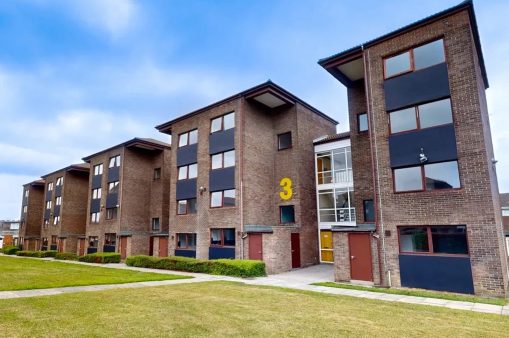
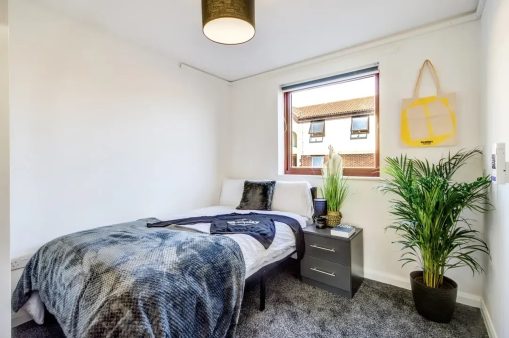
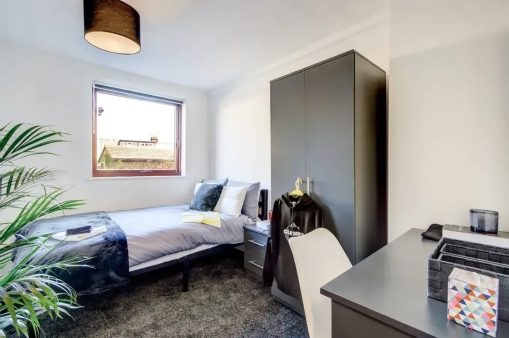
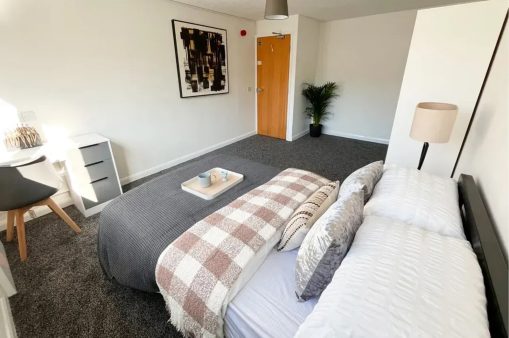
Clanny House is one option to consider, sitting around a mile west of the City Campus close to Millfield Metro and Barnes Park. For a wider view of what is on offer, our listings page lets you filter by price, room type, and distance from your university. Sunderland’s private accommodation supply is smaller than larger student cities, so it is worth starting your search early.
If you are weighing up costs more broadly, our guide to paying for student accommodation and our overview of the different types of student accommodation are both useful background reading.
Sunderland at a glance
Sunderland is a city of around 274,000 people on the north-east coast of England, where the River Wear meets the North Sea. It became a city in 1992 as part of Queen Elizabeth II’s 40th-anniversary city status awards, and has a heritage that runs from the Venerable Bede’s monastery at Monkwearmouth in the seventh century through shipbuilding, glassmaking and coal mining, to a modern economy built on car manufacturing, software and the creative industries.
The University of Sunderland is the city’s main higher education institution, with around 28,700 students across two campuses in Sunderland and a wider international footprint. Sunderland College, part of Education Partnership North East, adds a further 14,000 or so students through its college and degree-level provision, delivered in partnership with the University of Hull. The result is a young population concentrated in and around the city centre and the riverside, particularly near the two university campuses.
Nissan’s Sunderland plant, just north of the city, is the UK’s largest car factory, producing more than 325,000 vehicles in 2023/24 and supporting tens of thousands of jobs across the supply chain. The city is also home to Sunderland Software City, a fast-growing tech and digital cluster, and is the site of the planned Crown Works Studios film and television complex at Pallion. For students, this means a city with real industries on its doorstep and graduate employment prospects that are often overlooked: 95% of University of Sunderland graduates are in employment or further study 15 months after graduation, with most staying in the north-east.
Culturally, Sunderland punches above its weight. The Fire Station auditorium, in the city’s Music, Arts and Culture Quarter, hosts more than 250 shows a year. The Sunderland Empire is a Grade II listed Edwardian theatre running West End touring productions, opera and ballet. Sunderland was named a Music City in January 2025 and is currently in the middle of a year-long Year of Music programme. The annual Sunderland Festival of Light at Mowbray Park draws crowds across late October and November.
Sport is a big part of life here. Sunderland AFC returned to the Premier League for the 2025/26 season after winning the Championship play-off final at Wembley in May 2025, with home matches at the 48,707-capacity Stadium of Light. Sunderland RFC and Sunderland Cricket Club both play at Ashbrooke Sports Club, the historic ground south of the city centre that has been formalised as a student hub partnered with the university. Sunderland Aquatic Centre, the largest swimming facility in the north-east, has an Olympic-standard 50-metre pool.
The coast is one of Sunderland’s quieter advantages. Roker Beach holds a 2025 Blue Flag and Seaburn Beach holds a 2025 Seaside Award, both reachable from the city centre by Metro in around 10 to 15 minutes. The seafront has been substantially redeveloped, with bars, restaurants and the STACK Seaburn shipping container village, and it is the eastern end of the Coast to Coast cycle route.
For green space, Mowbray Park sits in the city centre and hosts the Festival of Light. Backhouse Park is a wooded valley on the edge of Ashbrooke. Herrington Country Park, a former colliery site of around 110 hectares, surrounds Penshaw Monument, a National Trust-owned Greek temple-style monument that has become an unofficial symbol of the city. For day trips, Newcastle is 17 to 22 minutes away by train, Durham about 40 to 50 minutes, the Northumberland coast under an hour by car, and Beamish Living Museum of the North around half an hour.
Getting around Sunderland
Sunderland is a walkable city for students, and most accommodation, the two main university campuses and the city centre nightlife are within a couple of miles of each other. For longer journeys, the Tyne and Wear Metro, buses and trains all run from the city.
By Metro
Sunderland is on the Tyne and Wear Metro Green Line, which is the easiest way to get between the city, Newcastle and the coast. The line runs from South Hylton in the west, through Pallion, Millfield, University, Park Lane (the main bus and Metro interchange in the city centre), Sunderland (which is also the main National Rail station), St Peter’s, Stadium of Light, Seaburn and on into Newcastle and the coast. The University station puts you within five minutes’ walk of City Campus, and St Peter’s is the closest stop for the Sir Tom Cowie Campus. Newcastle city centre is around 25 minutes by Metro.
Most students load tickets onto a Pop card, and a Network One Student or Young Person ticket gives unlimited travel across most buses, the Metro, the Sunderland-to-Blaydon Northern rail line and the Shields Ferry.
Sunderland Connect
University of Sunderland students can travel free on dedicated Sunderland Connect bus routes between the two campuses and student accommodation, on production of a valid university ID. This is one of the easier ways to move between City Campus and St Peter’s without paying for a separate Metro fare.
By bus
Stagecoach North East and Go North East run the bulk of services in the city, with Park Lane Interchange acting as the central hub. The North East Mayor’s £1 single bus fare is available across the region for under-22s. Both major operators sell student-specific termly and annual passes, which are worth comparing if you commute regularly.
By train
Sunderland railway station is on the Durham Coast Line, run by Northern Trains, with frequent services to Newcastle (17 to 22 minutes) and Middlesbrough. Grand Central runs up to six direct services a day to London King’s Cross, taking around three and a half hours via Hartlepool and York. There are no direct LNER services to London from Sunderland; the once-daily LNER service ended in December 2024. For Edinburgh, the usual route is to change at Newcastle, with a total journey of around two hours.
By bike
Sunderland is reasonably bike-friendly. The Coast to Coast (C2C) cycle route ends at Roker, the Wear riverside path links the city to the coast, and there are dedicated cycle lanes along Whitburn Road and other arteries. The city does not have a major dock-based bike hire scheme, but commuting by bike is straightforward thanks to the city’s compact size.
Student areas in Sunderland
Sunderland is small enough that no student is more than a few miles from a campus, but the character of each area varies. The main student neighbourhoods sit either in the city centre or along the river to the north-east, with a cluster of more residential streets to the south.
City Centre and Sunniside
The city centre puts you in walking distance of the City Campus (5 to 12 minutes), the main shopping streets, the Park Lane bus and Metro interchange, and the Sunniside leisure quarter where most of the bars and restaurants are concentrated. Accommodation here tends to be modern apartments and studios, including the Panns Bank development on the riverside, which sits at the southern edge of the centre. This is the most expensive student area in Sunderland on average, but rents here are still lower than in many other UK student cities. It is the obvious choice if you want to walk everywhere and stay close to the social scene.
St Peter’s and Monkwearmouth
The north bank of the river, around the Sir Tom Cowie Campus at St Peter’s, has been steadily regenerated and now mixes Victorian terraces with newer riverside developments and student housing. It is on the doorstep of the Business, Law, Computing and Engineering campus, one Metro stop from the city centre, and within walking distance of Roker Beach. It is quieter at night than the city centre but has its own pubs and the Sheepfolds Stables independent food and drink hub nearby.
Ashbrooke
Ashbrooke is Sunderland’s largest conservation area, a leafy Victorian and Edwardian suburb directly south of the city centre. It is around 10 to 20 minutes’ walk to City Campus and a Metro hop or 25 to 35 minutes’ walk to St Peter’s. Many of the larger Victorian houses have been subdivided into shared student homes, and Ashbrooke Sports Club, home to Sunderland Cricket Club and Sunderland RFC, has been formalised as a student hub partnered with the university from 2025/26. Ashbrooke tends to be a popular choice for second and third years who want a quieter residential feel without being far from campus.
Hendon
Hendon is an east-end coastal area of terraced Victorian housing, around 10 to 15 minutes’ walk from City Campus. It is one of the more affordable parts of the city for students and is mainly made up of shared houses rather than larger modern developments. The area has a mixed residential character rather than being student-dominated.
Roker and Seaburn
Roker and Seaburn run along the coast north of the city, with sandy beaches, the Roker Pier and Lighthouse, and a strong food and drink scene anchored by STACK Seaburn. Roker is closest to the St Peter’s Campus and a popular option for students who want easy access to the beach and seafront cafes. Rents on the seafront tend to be at the higher end, but inland streets in Roker and Fulwell are more affordable. The trade-off is a quieter nightlife than the city centre.
Chester Road and Millfield
Chester Road runs west from City Campus and is lined with shared student houses, takeaways, international supermarkets and convenience stores. Millfield, the area immediately west of the city centre with its own Metro stop, is a more affordable and predominantly residential area popular with students looking for shared houses. Both work well for students at City Campus who want lower rents and are happy with a 10 to 20 minute walk into town.
Pallion and Thornhill
Pallion sits west of the city centre on the south bank of the river, with its own Metro stop, and is one of the more affordable student-friendly areas. It is also the planned home of the Crown Works Studios film and TV development. Thornhill, between Ashbrooke and the city centre, is a more compact area of terraced housing close to City Campus.
Student life in Sunderland
Sunderland’s nightlife and social scene is concentrated in three main clusters: Sunniside, Park Lane and Vine Place, and Holmeside. Each has its own character, and most students end up moving between them on a typical night out.
Sunniside, the leisure regeneration zone east of the city centre, is the home of independent bars and restaurants. Sam’s Bar, The Looking Glass, The Church Door, Bar 1313 and 808 Bar and Kitchen are all here, alongside places like Libby May’s Speakeasy and Gin and Bear It. Park Lane and Vine Place are the more student-orientated late-night cluster, anchored by Trilogy nightclub in the Galen Building. Holmeside is the home of Independent, the city’s main live music venue, alongside The Point and several long-standing pubs.
For live music, the city is more interesting than its size suggests. Pop Recs Ltd, on High Street West, is an independent music venue and CIC running gigs across the year. The Bunker on Stockton Road has been a not-for-profit rehearsal and gig space since 1982 and runs a 50-capacity live room. The Peacock, owned by Barry Hyde of The Futureheads, combines a working pub with a recording studio upstairs. The Ivy House on Worcester Terrace is a Victorian ale house with a first-floor venue and a strong vegan menu. The Fire Station auditorium hosts touring acts and comedy in a 500-seat or 800-standing room. The Stadium of Light has hosted Beyoncé, Spice Girls, Ed Sheeran and other major stadium tours in recent years.
The independent food scene has come on strongly in the last few years. Sheepfolds Stables, near St Peter’s, houses I Scream for Pizza, The Calabash Tree (Caribbean), Vito’s Osteria, Ember and Mother Mercy Cocktail Cabin in a single converted-stables courtyard. Mackie’s Corner in the city centre hosts Fat Unicorn Kitchen, Crave, Pablo Eggs-Go-Bao and Café 1851. My Delhi, near the city centre, is a multi-award-winning Indian restaurant. Wild Fire near City Campus is a popular pizza spot. The Sunderland Food and Drink Festival across Keel Square and Market Square draws around 30,000 visitors each summer.
A few useful safety notes. Many bars and clubs in the city run the Ask for Angela scheme, where you can discreetly signal to staff if you feel unsafe. Project Shield, funded through the Northumbria Police and Crime Commissioner, runs additional patrols on night-time transport routes, and the British Transport Police text-line is 61016 for non-emergency reports on the rail network and Metro. The University of Sunderland Students’ Union (YourSU) runs a student advice service for support around housing, money and personal safety.
For students living in Sunderland year-round, the Year of Music programme through 2025 to 2026 means more live events than usual, including the Waves and Ripples festivals and a calendar of free and ticketed gigs across the city.
Student accommodation in Sunderland FAQs
Is Sunderland affordable for students?
Sunderland is one of the most affordable major student cities in the UK. The cost of living, including rent, food and going out, is consistently lower than in cities like Manchester, Bristol or Leeds. Student accommodation in Sunderland is available across a range of price points, from rooms with shared bathrooms in university residences through to en-suites and self-contained studios.
What are the best student areas in Sunderland?
The most popular areas are the city centre and Sunniside (closest to City Campus and the social scene), St Peter’s and Monkwearmouth (closest to the Sir Tom Cowie Campus and the river), and Ashbrooke (a quieter residential area popular with second and third years). More affordable options include Hendon, Millfield, Pallion, Chester Road and Roker, all within easy walking or Metro distance of one of the campuses.
How do students get around Sunderland?
Most students walk or take the Tyne and Wear Metro between accommodation, campus and the city centre. The Metro Green Line links Sunderland to Newcastle in around 25 minutes. Sunderland Connect runs free dedicated buses between campuses and student accommodation for University of Sunderland students with valid ID. Stagecoach North East and Go North East run the main city bus network, and the £1 single bus fare for under-22s applies across the region. Sunderland railway station has direct trains to Newcastle, London and other major cities.
How long is the train from Sunderland to Newcastle?
The direct train from Sunderland to Newcastle takes around 17 to 22 minutes. The Tyne and Wear Metro Green Line also runs between the two cities and takes around 25 minutes, with services every few minutes throughout the day.
How safe is Sunderland for students?
Sunderland has a number of measures in place to support student safety. Many bars and clubs operate the Ask for Angela scheme, Project Shield funds additional patrols on night-time transport, and the city has invested in lighting, CCTV and help-points in central areas including Mowbray Park. The Students’ Union (YourSU) runs an advice service that can support students with safety concerns alongside academic and personal issues.
What is the University of Sunderland known for?
The University of Sunderland is ranked 27th in the UK in The Guardian University Guide 2026, its highest position to date. It is particularly strong in Pharmacy and Pharmacology (1st in the UK in the Guardian 2025), Computer Games and Animation, Media and Film Studies, Journalism and Nursing. The university opened a new medical school in 2019, with the first cohort graduating at the Stadium of Light in July 2024. Around 95% of graduates are in employment or further study within 15 months.
Is Sunderland good for international students?
Sunderland has a sizeable international student community, with around 14% of the University of Sunderland’s UK-registered students from outside the UK and EU, and partnerships in 16 countries. The university is ranked 3rd in the UK and top 10 in Europe for International Student Diversity (QS Europe 2026). It runs an International Student Scholarship of £5,000 off undergraduate fees and £4,500 off postgraduate fees for eligible countries, alongside an Alumni Loyalty Scheme of 20% off postgraduate fees for returning students.
How long are tenancy agreements in Sunderland?
Most private student tenancies in Sunderland run between 42 and 51 weeks, covering the full academic year. University of Sunderland accommodation offers shorter contracts as standard, typically 40 or 42 weeks. Some private providers offer summer or short-term contracts, which is worth checking on individual listings if you need flexibility around placements or international travel.
When should I start looking for student accommodation in Sunderland?
Most students start looking around six months before they plan to move in. The University of Sunderland opens applications for its own accommodation on 1 March each year for the following September intake. Private providers typically begin advertising new academic year availability from January or February, with peak booking activity from March to June. International and first-year students often start their search earlier.
Do I need a guarantor for student accommodation in Sunderland?
Most private providers ask for a UK-based guarantor, usually a parent or relative who agrees to cover the rent if you are unable to. International students or students without a UK guarantor can use a paid guarantor service such as Housing Hand, which most providers in Sunderland accept. University of Sunderland accommodation does not require a guarantor.