Student accommodation in Winchester
Winchester has a smaller and less concentrated student accommodation market than the big university cities, which means your options usually fall into two main groups. The University runs its own accommodation for first years, with the private market covering much of the remaining demand: modern studios and en-suite rooms in managed developments closer to the centre, and shared houses in the residential streets that ring it.
The University of Winchester offers a first-year accommodation guarantee to full-time undergraduates who hold the University as their firm choice and apply by the published deadline, so most first years start out in University-run accommodation. From second year onwards, the majority move into the private market, usually sharing a house or flat with friends. This is the point at which most people start browsing listings, and it is worth starting early because the established shared-house streets fill up quickly.
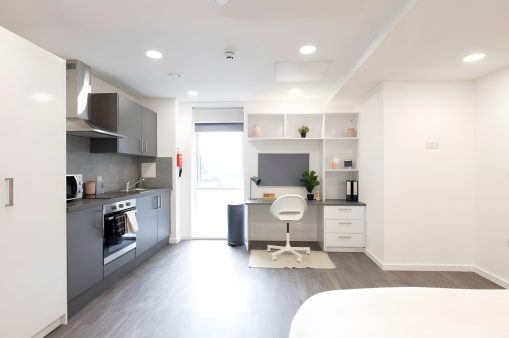
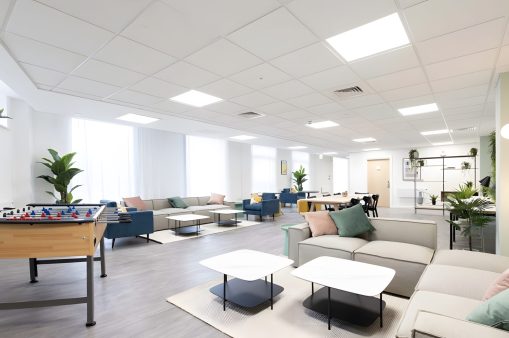
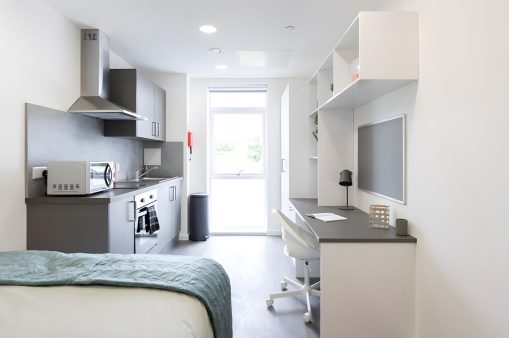
In terms of room types, you will find self-contained studios for students who want their own kitchen and bathroom, en-suite rooms in shared apartments where you have a private bathroom but share the kitchen, and shared houses where bedrooms, bathrooms, and a kitchen are split between a group. Studios are usually the most expensive option, en-suite rooms sit in the middle, and shared houses tend to be the most affordable option per person. Most private rooms come furnished, and many managed developments include bills, broadband, and access to communal spaces such as study rooms, gyms, or social areas in the weekly rent.
Winchester is not a cheap city. It is one of the more affluent places in the country, and rents can reflect that, especially compared with some larger student cities outside London. The trade-off is a safe, attractive, walkable place to live with everything close at hand. To narrow things down by price, room type, and distance from campus, use the filters on Mystudenthalls.com.
A few practical points before you sign anything. Full-time students are exempt from council tax, so you should not be paying it, though it is worth confirming with any landlord. Most private tenancies run for somewhere between 44 and 51 weeks to cover the academic year, and many private landlords will ask for a guarantor, usually a UK-based parent or guardian. Always check exactly what is included in the rent and what is charged on top, as the line between bills-included and bills-excluded varies from one property to the next.
Winchester at a glance
Winchester is the county town of Hampshire, with a population of around 48,000 in the city itself. It sits on the River Itchen, about 60 miles south-west of London and 14 miles north of Southampton, at the western gateway to the South Downs National Park. This was the capital of the Anglo-Saxon kingdom of Wessex under Alfred the Great and remained one of the most important cities in England well beyond the Norman Conquest, and that long history is still woven through the streets rather than tucked away in a museum.
The centrepiece is Winchester Cathedral, the longest medieval cathedral in the world and the burial place of Jane Austen, who spent her final weeks in a house nearby. The compact centre is full of this kind of heritage, which gives the city a distinctive, settled feel that is a big part of its appeal for students.
It also has a strong reputation as a place to live. The Complete University Guide named Winchester the safest area in England and Wales in its 2025 safety analysis, and the city was the overall winner of The Sunday Times Best Places to Live guide in 2016. Green space is everywhere, from St Catherine’s Hill just south of the centre to the water meadows along the Itchen where John Keats walked while writing To Autumn, and the South Downs are on the doorstep. The train makes day trips easy too: London is around an hour away, Southampton 20 minutes, and Portsmouth, Salisbury, and the New Forest are all within comfortable reach.
Getting around Winchester
Winchester is small enough that most students get around on foot for day-to-day life. For longer journeys, the bus and train networks do the rest.
On foot
The compact centre is the defining feature. The University’s main King Alfred campus sits on West Hill, roughly a 10-minute walk from the centre, and most accommodation, the shops, the cathedral, and the nightlife are all within a short walk of one another. For a lot of students a travel pass is a nice-to-have rather than a necessity.
By bus
Stagecoach South runs the local routes within the city, and Bluestar connects Winchester to Southampton, which is the trip most students make for bigger shopping runs and nights out. Both operators offer student passes and discounts worth setting up if you travel regularly, and single fares are often relatively affordable, with national fare cap schemes applying when available.
By train
Winchester station sits on the South West Main Line, run by South Western Railway, with frequent direct trains to London Waterloo in under an hour at their fastest. Southampton Central is around 20 minutes away and Southampton Airport Parkway even closer, with direct services to Basingstoke, Portsmouth, and Bournemouth. A 16 to 25 Railcard or a season ticket brings fares down significantly for regular travel.
By bike
The city’s size makes cycling genuinely practical, and the University supports it well, with secure cycle parking, showers, a free maintenance service, and an e-bike loan scheme.
Student areas in Winchester
Unlike a big city with one or two obvious student districts, Winchester’s student population is spread across several residential areas, most within walking or short cycling distance of campus. One thing worth knowing across the board: the city operates planning controls, known as an Article 4 direction, in parts of Stanmore and Winnall, which limit the creation of new shared student houses there. This mostly affects landlords rather than tenants, but it is one reason the established shared-house streets get snapped up early, so it pays to start your search in good time.
City centre
Living centrally puts you within a short walk of campus, the shops, the station, and the city’s pubs and restaurants. It is the most convenient option and usually the most expensive, with a mix of period flats, converted houses, and modern studios. If you want to roll out of bed and be in a lecture in 10 minutes, this is the spot, as long as the budget stretches.
Stanmore
Just south-west of the centre, Stanmore is the most established shared-house area in the city and popular with second and third years. Rents tend to be more affordable than the centre, and the streets here fill up fast.
Fulflood
West of the centre, Fulflood is a neighbourhood of Victorian and Edwardian terraces that is slightly more upmarket than Stanmore but still very walkable. It strikes a good balance between character, quiet, and proximity to both campus and the station.
Winnall
North-east of the centre, Winnall is quieter and more affordable, with a retail park and supermarket nearby. As with Stanmore, it falls within the Article 4 area, so established lets are worth chasing early.
Hyde
Just north of the centre, Hyde is a pocket of Victorian terraces, many converted into shared houses, and is well placed for the station and a short walk into town. It is a calm, residential choice without full city-centre prices.
Bar End
To the south-east, Bar End is one of the more budget-friendly areas and is handy if you use the University’s sports grounds, which are based here. It is a little further out but still manageable on foot or by bike.
Highcliffe
Winchester has its own Highcliffe area south-east of the centre, not to be confused with the better-known Highcliffe near Bournemouth. It has a good supply of shared houses and suits students who do not mind a slightly longer commute in exchange for lower rents.
Badger Farm
A suburban estate to the south, Badger Farm is the least central of the popular areas but has reliable bus links and a large supermarket. It can work well for students who prefer a quieter setting.
Student life in Winchester
It is worth being honest about what student life in Winchester is and is not. This is a small, affluent cathedral city, not a sprawling student metropolis, so the scene is built more around pubs, bars, and independent venues than around big clubs. For a lot of students that is exactly the appeal, and for the nights when you want something bigger, Southampton is around 20 minutes away by train, with direct buses also available.
The hub of organised student social life is on campus, where the Students’ Union runs the main venue for student nights, including its long-running weekly BOP night, alongside more than 40 societies to get involved with. In the city itself, the pub and bar scene is genuinely good for somewhere this size. The Black Boy on Wharf Hill is a famously quirky real-ale pub, the Wykeham Arms is a classic Winchester institution, and the Railway Inn near the station is a reliable spot for live music. For cocktails and later evenings, Incognito and Greens are popular, and Overdraft pairs craft beer with street food and DJs. The Everyman cinema, housed in a beautifully converted former chapel, and the Theatre Royal round out the options.
Beyond the nightlife, Winchester punches above its weight on food, with a strong independent cafe and restaurant scene and a Farmers’ Market, one of the largest in the country, that is great for fresh local produce. On safety, the city is in a strong position, named the safest area in England and Wales in the Complete University Guide’s 2025 analysis. The Winchester Community Safety Partnership launched a Violence Against Women and Girls strategy in 2024, bringing together the University, Hampshire Constabulary, the city council, and local venues, and many bars and pubs operate the Ask for Angela scheme, which lets you discreetly signal to staff that you feel unsafe and need help.
Student accommodation in Winchester FAQs
Is Winchester a good place to be a student?
Winchester suits students who want a safe, attractive, low-stress place to study with history and green space on the doorstep and excellent transport links. It was named the safest area in England and Wales by the Complete University Guide in 2025, and London, Southampton, and Portsmouth are all easy day trips by train. The trade-off is that it is a smaller, quieter, and more expensive city than the big student hubs, with a social scene built around pubs and bars rather than large clubs.
How much does student accommodation in Winchester cost?
Winchester is one of the more expensive student cities in the UK, though still cheaper than London. Shared houses are generally the most affordable option per person, en-suite rooms in shared apartments sit in the middle, and self-contained studios are at the top end. The best way to compare current prices is to use the filters on Mystudenthalls.com to sort by budget and room type.
What are the best student areas in Winchester?
The most popular areas are the city centre for convenience, Stanmore and Fulflood for established shared houses close to campus, and Hyde and Winnall for quieter, more affordable streets. Bar End, Highcliffe, and Badger Farm are slightly further out and tend to be cheaper. Most are within walking or short cycling distance of the University.
How do students get around Winchester?
Most students walk, as the city is compact and campus is close to the centre. Stagecoach South runs local buses, Bluestar connects the city to Southampton, and there are student discount passes from both operators. Winchester station has fast, frequent trains to London Waterloo, Southampton, and beyond, and a 16 to 25 Railcard or a season ticket can cut fares significantly.
Which universities are in Winchester?
The University of Winchester is the city’s main university, with around 7,500 to 8,000 students. Winchester School of Art, part of the University of Southampton, has over 1,500 students based in the city. Winchester is also home to Peter Symonds College, one of the largest sixth-form colleges in England, though this is a further-education college rather than a university.
Where do most University of Winchester students live?
First-year undergraduates are usually in University-run accommodation, as the University offers an accommodation guarantee to eligible firm-choice applicants. From second year onwards, most students move into private shared houses and flats in areas such as Stanmore, Fulflood, Hyde, and the city centre, all within walking distance of the King Alfred campus. You can compare what is available on our student accommodation near the University of Winchester listings.
Is Winchester safe for students?
Winchester is one of the safest cities in the country for students, named the safest area in England and Wales in the Complete University Guide’s 2025 safety analysis. The city runs a Violence Against Women and Girls strategy launched in 2024, and many venues operate the Ask for Angela scheme, which allows you to discreetly ask staff for help if you feel unsafe on a night out.
When should I start looking for student accommodation in Winchester?
Because Winchester is a small market and the best shared-house streets fill up quickly, it pays to start early. Second and third years often begin searching in the autumn or winter for the following September, while first-year and international students typically start looking from January once their university place is more settled.