
For the first time in years, the student accommodation market has tipped in students’ favour. Occupancy across the UK’s private purpose-built buildings fell to 85.4% this academic year, rents are rising more slowly than inflation, and providers are really competing for 2026/27 bookings with a vast range of discounts and incentives.
None of that makes renting particularly cheap. The average student pays £575 a month, according to Save the Student’s National Student Accommodation Survey 2026, and NatWest’s 2025 Student Living Index puts the figure at a similar £563.
What you actually pay obviously depends on the city, the room type and how many weeks the contract runs. On Mystudenthalls.com, live weekly rents for purpose-built student accommodation currently run from £79 a week in Sheffield all the way to and beyond £679 a week for a premium central London studio, every city listed here starts below £180 a week, and most of the properties come with bills included. It’s also worth noting that providers are being more flexible than ever before, with various short stay tenancies becoming way more common.
Key findings
- The average student rent for 2026/27 is £575 a month, up 2.1% on last year and below inflation over the same period.
- Live weekly rents on Mystudenthalls.com run from £79 in Sheffield to £679 in central London, and every city listed starts below £180 a week.
- The city dictates more than anything else: the same en-suite room costs £7,920 more over a 44-week contract in central London than in Sheffield.
- Purpose-built occupancy fell to 85.4% in 2025-26, and discounts and incentives are back on the table for 2026/27 bookings.
- LSE students report the highest average rent in the country at £1,033 a month, and Lincoln students the lowest at £413.
How much does student accommodation cost in the UK?
The £575 national average covers every kind of student housing, from university rooms to houses rented from private landlords, and it hides a wide spread. In London, the same Save the Student survey puts the average at £793 a month, and the Unipol and HEPI “Priced Out? The Accommodation Costs Survey 2024: London Edition” found the average purpose-built rent in the capital was £13,595 a year, about £295 a week over 46 weeks.
For private purpose-built accommodation specifically, the live listings on Mystudenthalls.com run from £79 a week in Sheffield up to £679 a week for a top-end studio in Bloomsbury, checked in July 2026. The city you choose, the room type and the length of the contract decide what you will pay inside that range.
What you’ll pay by room type
Private student accommodation is usually sold as one of three room types, and the price gap between them is often bigger than the gap between cities.
Shared flats give you a private bedroom with a kitchen and living space used by flatmates, and they are usually the most affordable option in any building. In Sheffield, Nottingham and Coventry, the lowest weekly rents on Mystudenthalls.com currently sit below £100.
En-suite rooms add a private bathroom while keeping the shared kitchen and lounge. They are the most common room type in purpose-built buildings and the usual middle ground on price. Expect roughly £110 to £180 a week in most cities outside London, and £250 to £400 a week in the capital.
Studios are fully self-contained, with your own kitchenette and bathroom. The privacy makes them the priciest room type, typically £160 to £300 a week outside London, with the most expensive central London studios reaching £679 a week on current listings. As a reference for the wider market, the Unipol and HEPI 2024 London survey notes that the capital’s dearest private direct-let studios reach rents of up to £800 a week.
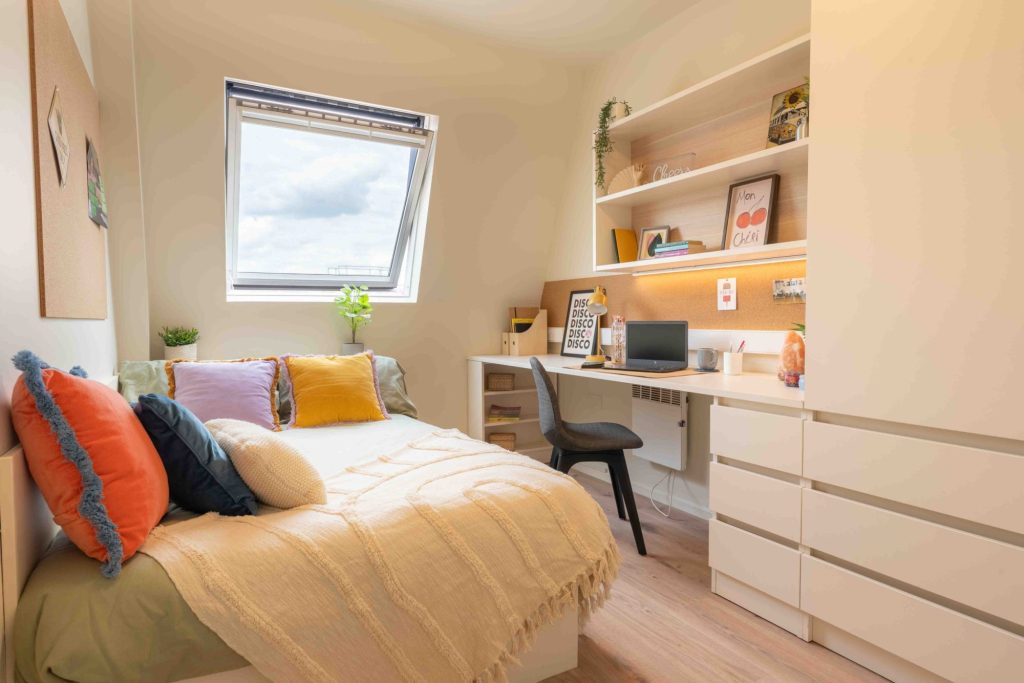
Average student rent by city (2026/27)
The single biggest influence on your rent is the city you study in. The table below shows current student accommodation prices across the private purpose-built properties listed on Mystudenthalls.com, given as the weekly range from the cheapest room to the most expensive. Every city links to its own page, where you can filter by price, area and room type.
| City | Weekly rent |
|---|---|
| Sheffield | £79 to £188 |
| Coventry | £85 to £254 |
| Nottingham | £97 to £230 |
| Liverpool | £105 to £208 |
| Leicester | £105 to £197 |
| Newcastle | £112 to £247 |
| Colchester | £114 to £170 |
| Leeds | £115 to £295 |
| Birmingham | £115 to £205 |
| Southampton | £140 to £276 |
| Glasgow | £149 to £277 |
| Manchester | £155 to £305 |
| Cardiff | £160 to £242 |
| Edinburgh | £160 to £353 |
| Bristol | £160 to £387 |
| Exeter | £160 to £245 |
| Lancaster | £160 to £200 |
| Aberdeen | from £165 |
| Bournemouth | £175 to £199 |
| London | £179 to £679 |
Ranges reflect live Mystudenthalls.com listings for private purpose-built student accommodation and change as rooms sell and prices update, so treat the table as a guide and check the city page for today’s prices.
A room at £120 a week in Sheffield and a room at £300 a week in central London can both be en-suites with bills included, yet over a 44-week contract the difference between them is £7,920.
£7,920: the gap over one 44-week contract between a £120 a week room in Sheffield and a £300 a week room in central London.
Save the Student’s per-university data tells the same story: in its 2026 survey, students at LSE reported the highest average rent at £1,033 a month, while students at the University of Lincoln reported the lowest at £413. The regional breakdown in the same survey runs the same way, with Scotland second to London at £703 a month and Wales the lowest at £475.
University halls, private student halls or a rented house: which costs more?
Most students choose between three options, and each comes in at a different price point.
University halls are owned or nominated by your institution, usually prioritise first years, and generally include utilities in the rent. Prices vary enormously between universities and room grades, and contracts tend to be shorter, often 39 to 44 weeks, which can make a higher weekly rent cheaper across the year.
Private student halls are the purpose-built and co-living buildings listed on Mystudenthalls.com. They are often open to students at any university and in any year of study, with bills included plus facilities such as gyms, study rooms, cinema rooms and on-site teams. Weekly prices usually sit above basic university rooms and below the cost of renting alone, and you choose your building and area rather than being allocated one.

Houses and flats rented from private landlords are the traditional second-year option. The advertised weekly rent per person can look lower than purpose-built options, but bills come on top, deposits and referencing mean more admin and more upfront cash, and quality varies far more from property to property. Since 1 May 2026 this market also works differently in law, which our deposits section a bit further down the page covers.
A basic university room undercuts everything else in some cities, a shared room in a private building wins in others, and a house rented with friends sometimes comes out cheapest of all once shorter contracts are counted. Whichever way you go, compare the full-year cost with the bills counted, not the weekly figure.
Weekly, monthly or yearly: how to compare prices properly
Student rent is often talked about in three different ways, and mixing them up is the most common budgeting mistake. Surveys usually quote monthly figures, listings usually quote weekly figures, and your bank account…experiences the annual figure.
The bit that matters is weekly rent multiplied by contract length. A £170 a week room on a 44-week contract costs £7,480 for the year. The same room on a 51-week contract costs £8,670, which is £1,190 more for the same thing. A room that looks £15 a week cheaper can cost more across the year if the contract runs longer, so always compare total contract cost rather than the weekly rate.
For quick mental maths, a weekly rent multiplied by 4.33 gives the true monthly equivalent, because a month is slightly longer than four weeks. £150 a week is about £650 a month, not £600. Most contracts in private student accommodation run between 42 and 51 weeks, with shorter terms sometimes available for postgraduates and longer stays for students remaining over summer.
What’s included in the rent, and what isn’t
In private student accommodation, bills included typically covers electricity, gas, water, contents insurance and wifi within the weekly rent, and a growing number of properties also cover the TV Licence, (which otherwise costs £180 a year from 1 April 2026). Always check with the provider for exactly what is included, because the specifics can vary from property to property.
In a house rented from a private landlord, the rent usually stands alone. MoneySuperMarket’s Household Money Index from July 2025 put average household utility costs at around £187 a month across energy, water and broadband, which split between housemates typically adds £45 to £65 a month each on top of the rent, and more in poorly insulated properties. That gap is why a like-for-like comparison should always add estimated bills to any rent quoted without them.
One cost students never pay in any of these markets is council tax. Full-time students are exempt, and a household made up entirely of full-time students is exempt altogether. You may need a student certificate from your university to claim it.
Deposits, guarantors and upfront costs
The rules on what you can be asked to pay upfront depend on where in the UK you study.
In England, the Tenant Fees Act 2019 caps deposits at five weeks’ rent where the annual rent is under £50,000, and holding deposits at one week’s rent. The Renters’ Rights Act added further protections from 1 May 2026: landlords of ordinary houses and flats can no longer demand large sums of rent in advance, with a maximum of one month payable once the tenancy is agreed. Private student buildings registered with an approved housing code operate outside those new tenancy rules for contracts signed from that date. That is why some purpose-built providers can still offer instalment plans aligned to loan payments, or accept a year’s rent upfront where a student prefers to pay that way. Some purpose-built properties take only a small reservation fee rather than a full deposit.
In Scotland, deposits are capped at two months’ rent, and some providers ask for no deposit at all. In Wales, the Renting Homes (Fees etc.) (Wales) Act 2019 caps holding deposits at one week’s rent, though there is no statutory cap on the security deposit itself, so check the figure before you commit.
Guarantors can be the other upfront hurdle. UK students usually name a parent or guardian. International students without a UK guarantor can use a paid guarantor service, which stands in so rent can be paid in instalments rather than in large advance sums, or some providers accept payment in advance instead. The Mystudenthalls.com guide on getting your deposit back is worth reading before you sign anything.
Will your Maintenance Loan cover the rent?

For 2026/27, the maximum Maintenance Loan from Student Finance England is £10,830 for students living away from home outside London and £14,135 in London, and only students from households earning £25,000 or less receive the maximum. Most receive less, and Save the Student’s most recent money survey found the average student receives around £640 a month in loan against average living costs of £1,142 a month.
90%: the share of the average £640 monthly Maintenance Loan taken up by the £575 average rent.
An average rent of £575 a month absorbs most of an average £640 loan before food, transport or course costs get a look in, which is why 61% of renting students in the 2026 accommodation survey said they struggled with housing costs at least some of the time. The loan is a contribution rather than full cover. Most students bridge the gap with part-time work, parental support or savings, and the size of that gap is decided largely by the city and room type chosen at booking. Funding also differs for students from Scotland, Wales and Northern Ireland, so check your own funding body’s rates rather than assuming the English figures apply.
Is student accommodation getting cheaper in 2026?
Not cheaper exactly, but rising more slowly and more negotiable than it has been for years. Occupancy across private purpose-built accommodation fell to 85.4% in 2025-26, from above 90% the year before, according to StuRents data reported by HEPI in April 2026, and providers have responded with restrained rent rises, discounted offers for returning students and cash incentives on 2026-27 bookings. Save the Student’s 2026 survey found rents rising at 2.1%, below inflation for the same period.
85.4%: the share of private purpose-built student rooms that found a tenant in 2025-26.
Empty rooms change how you should shop. Providers with availability are more open to offers, incentives and flexible contract lengths than they were during the shortage years, so it pays to compare several buildings and ask what is on the table rather than accepting the first price you are quoted. Timing still matters: the most popular buildings sell their best value rooms early, while buildings with rooms left over drop prices as the year goes on. The Mystudenthalls.com guide on when to book student accommodation covers that timing decision in detail.
How to pay less for student accommodation
Housing is where the biggest savings in a student budget sit, because the decisions are made once, at booking, rather than week by week. In rough order of impact:
Treat the city as a cost choice. A £50 a week difference in rent is £2,200 a year on a 44-week contract and £6,600 across a three-year degree. Nobody should pick a university on rent alone, but if you are choosing between comparable offers, the table above shows how far apart the markets sit.
Pick the room type deliberately. Moving from a studio to an en-suite typically saves £40 to £100 a week for the loss of a private kitchen. Moving from an en-suite to a shared flat saves again.
Compare total contract cost, not weekly rent. A shorter contract at a higher weekly rate is often cheaper across the year, and paying for summer weeks you will spend at home is money spent on an empty room.
Look one area out from the centre. In London especially, properties in outer zones with fast transport links undercut central rents by £100 a week or more, and the same logic applies on a smaller scale in most cities.
Count the bills before comparing. A room with bills included at £150 usually beats a £130 room plus separate utilities once real usage is counted.
Ask about offers. Incentives and discounts are common, so check what’s available.
About this report
Live prices are drawn from Mystudenthalls.com listings of private purpose-built student accommodation, checked in July 2026. The city table covers 20 cities chosen for the comparison. Prices change as rooms sell, and each city page carries current availability. National and per-university averages come from Save the Student’s National Student Accommodation Survey 2026, which surveyed 1,149 students between November 2025 and January 2026, and from NatWest’s 2025 Student Living Index, a survey of 5,001 undergraduates. London purpose-built benchmarks come from the Unipol and HEPI Accommodation Costs Survey 2024, occupancy figures from StuRents data reported by HEPI in April 2026, and loan figures from Student Finance England’s published 2026/27 rates for England.
Last updated July 2026.
How much is student accommodation FAQs
How much is student accommodation per week?
Across the live Mystudenthalls.com listings in July 2026, private student accommodation costs between £79 and £679 per week depending on city and room type. Most shared and en-suite rooms outside London sit between £100 and £200 per week with bills included, studios outside London typically run £160 to £300, and London runs from £179 to £679.
How much is student accommodation per month?
The average across all housing types is £575 per month according to Save the Student’s 2026 National Student Accommodation Survey, with NatWest’s 2025 Student Living Index at a similar £563. To convert a weekly listing price to a monthly figure, multiply by 4.33: a £150 a week room is about £650 a month.
How much is student accommodation in London?
Live London rents on Mystudenthalls.com currently run from £179 to £679 a week across 61 properties, depending on area, room type and how central you are. Save the Student’s 2026 survey puts average London student rent at £793 a month, and the Unipol and HEPI 2024 London survey found the average purpose-built rent was £13,595 a year. The London page lists every property with live prices and area filters.
What is the average student rent in the UK?
£575 a month, according to Save the Student’s National Student Accommodation Survey 2026, up 2.1% on the previous year. LSE reported the highest average in the survey at £1,033 a month and the University of Lincoln the lowest at £413.
What does "bills included" actually cover?
In most private student accommodation, bills included covers electricity, gas, water, contents insurance and wifi within the weekly rent, and some properties add the TV Licence. Always confirm the exact list on the listing, because inclusions vary by provider.
Do students pay council tax?
No. Full-time students are exempt from council tax, and a household where everyone is a full-time student is exempt entirely. You may need to provide a student certificate from your university to claim the exemption.
Is student accommodation cheaper than renting a house?
Sometimes. A house rented with friends can carry a lower headline rent per person, but bills, deposits and admin all need to be considered, and since 1 May 2026 landlords of ordinary rentals in England can take no more than one month’s rent in advance, which changes how payments work. Purpose-built rooms cost more per week on average but come with bills included and predictable totals. Compare the full-year cost of each with bills counted before deciding.
Can first-year students book private student accommodation?
Yes. Private student halls accept first years alongside returning students, and they suit anyone who wants to choose a specific area, room type or budget rather than being allocated a university room. Every property on Mystudenthalls.com is open to students at any institution.
Will my Maintenance Loan cover my accommodation?
Often not on its own. The 2026/27 maximum in England is £10,830 outside London and £14,135 in London, but most students receive less than the maximum, and the average loan of around £640 a month sits close to the average rent of £575. Most students supplement the loan with part-time work, family support or savings, so build the full year’s rent into your budget before booking.
When should I book to get the best price?
It depends on whether you are chasing a particular building or the lowest possible rent. The most popular rooms sell earliest, buildings with spare rooms tend to discount as the year goes on, and with the market running below full occupancy there is more late availability and more negotiating room than in recent years.