Lancaster student accommodation at a glance
Mystudenthalls.com currently lists 2 properties in Lancaster, with student flats, student studios and student apartments from £166.00 a week at the lower end and up to £190.00 a week for the newer riverside rooms, a range of £160 to £200 a week with bills included in the rent. The student accommodation Lancaster choice is smaller than in Manchester or Leeds. Because the market is small, current availability matters more than browsing a long list of options, and all four buildings were available to book for the coming academic year at the time of writing. The three cheapest rooms, all at £160 a week, are at CityBlock Penny Street and CityBlock Marton Street in the city centre and Bailrigg Student Living near campus, while The Sail Works beside the River Lune sits at the top at £200 a week. Lancaster University taught 18,620 students in 2024/25 according to the university’s published student statistics, and with only a handful of private buildings serving them, the better-located and lower-priced rooms can go early.
Private student accommodation or university accommodation?
Everything here is private student accommodation that Lancaster students book directly, run by professional operators rather than by a university. That is the main difference from a room in a university college at Bailrigg: private buildings welcome undergraduates, postgraduates and returning students in any year, you are not tied to a college allocation, and you choose the building and the part of the city that suits you. Private buildings often include utilities, internet and shared facilities in the weekly rent, though it is still worth comparing the full cost against university accommodation, and you can filter for what matters to you. Lancaster University was awarded a Gold rating in the Teaching Excellence Framework 2023 and was ranked 10th of 130 institutions in the Complete University Guide 2027, the best in north-west England, so it draws students from across the UK and overseas, and taking a private room is the route many second and third years follow once they leave college. If you are new to private student accommodation in Lancaster, our guide to the different types of student accommodation explains en-suite rooms, studios and shared flats in plain terms.
Cheapest areas for Lancaster students
Lancaster is small enough that rent is driven more by the building and how new it is than by the neighbourhood. The lowest rents right now, £166.00 a week, sit in two very different spots. Two of them are the CityBlock buildings in the city centre, and the third is Bailrigg Student Living next to the campus. CityBlock Penny Street and CityBlock Marton Street put you in the middle of town with en-suite rooms, and Penny Street lists studios too. Bailrigg Student Living gives you en-suite rooms in shared flats a short walk from teaching buildings for the same £160. The newer rooms at The Sail Works by the river cost more, at £190.00 a week. If budget is your first filter, sort by price on Mystudenthalls.com and the £166.00 rooms show first.
Best areas for Lancaster students
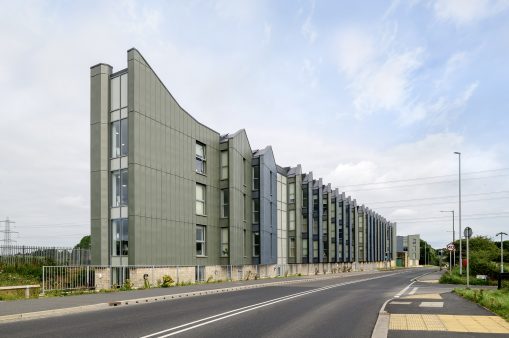
The real decision in Lancaster is city centre or campus. The city centre holds most of the social life, the shops, the Charter Market and the railway station, and you can walk across it in about fifteen minutes. CityBlock Marton Street is close to the city centre, CityBlock Penny Street sits on a main pedestrian street a few minutes from the shops and about an eight minute walk from Lancaster railway station, and The Sail Works is on Bulk Road near the River Lune, a short walk from the station and the buses to campus. From any of these you catch a frequent bus to the Bailrigg campus, about three miles south of town. If you would rather walk to lectures, Bailrigg Student Living on Scotforth Road is the closest option to Lancaster University, right by the Health Innovation Campus. Stagecoach runs up to 14 buses an hour between the centre and campus on weekdays in term time, so a city-centre base does not mean a slow morning. These are the student homes available now, and the map and distance filters show how each sits relative to your department.
Best areas by university
For most students moving to the city, the search usually comes down to whether you want to live near the Bailrigg campus or in the city centre. The university is a collegiate, self-contained campus at Bailrigg, about three miles south of the centre on the A6, and it is not somewhere you walk to from town in a few minutes. First years usually live in college on campus; second and third years typically move into private rooms either near campus or in the centre and commute in. For the shortest walk to lectures, Bailrigg Student Living is the pick. For a livelier base with a bus to campus, the two CityBlock buildings and The Sail Works work well. You can see every building mapped against the campus on our Lancaster University page. The university keeps around 1,400 bedrooms for continuing students each year according to its accommodation service, far fewer than the number who want to stay near Bailrigg, so many returning students look for private Lancaster University accommodation near campus or in the centre.
Getting around Lancaster
For most students the daily journey is the city-to-campus bus. Stagecoach Cumbria and North Lancashire runs the service; the 1 and 1A go direct to Lancaster University every ten minutes on weekdays in term, and with the 4, 100 and other routes there are up to 14 campus buses an hour between town and campus Monday to Saturday until early evening. A day return between the centre and campus is £3.40, and the UniRider pass gives unlimited travel across the Bay zone, which pays off if you travel three or more days a week as most campus commuters do. Lancaster railway station is on the West Coast Main Line, about five minutes from the centre, with direct trains to Manchester in around an hour and a half and London Euston in roughly two and a half hours. The centre itself is walkable in about fifteen minutes end to end. Some students cycle the signed route from town to Bailrigg in around twenty minutes, though it includes a climb. A room at Bailrigg gives you the shortest walk to lectures but a quieter spot at weekends. A city-centre room puts the social scene on your doorstep and adds a short bus each morning.
What is included and the room types
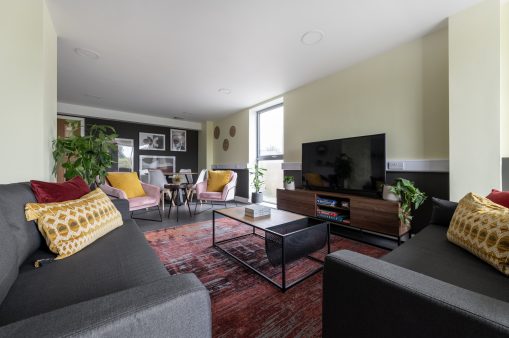
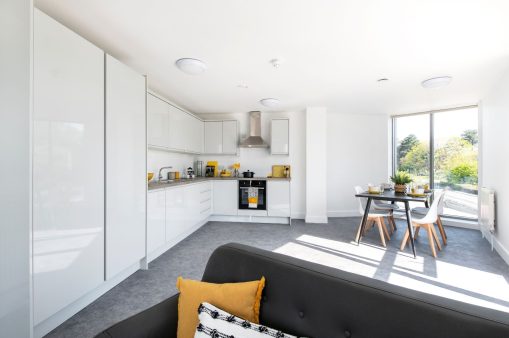
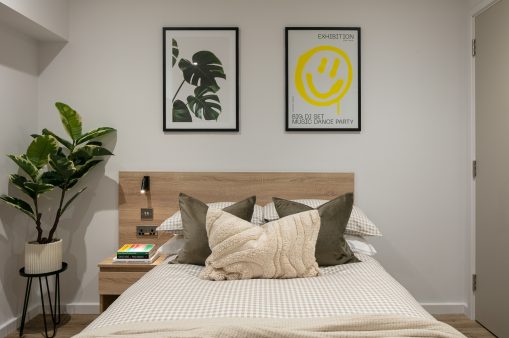
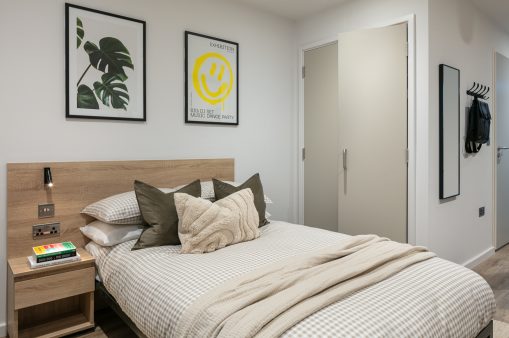
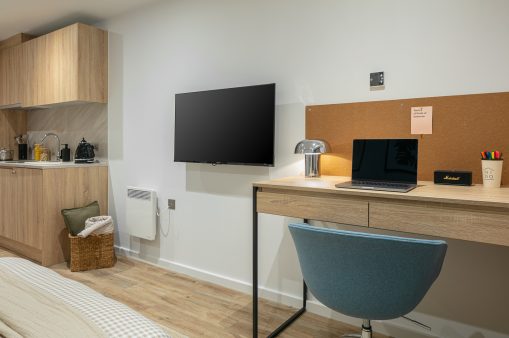
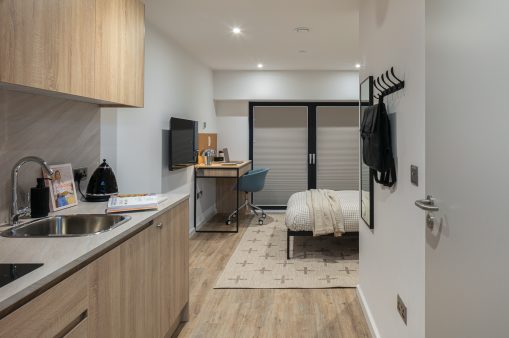
Rooms in Lancaster come in three shapes: en-suite rooms, where you have your own bathroom and share a kitchen with a handful of flatmates; studios, where your own kitchen is part of the room; and shared flats, where a group shares the kitchen and living space. All four buildings offer en-suite rooms, and both CityBlock Penny Street and The Sail Works also list studios. Use the room-type filter to compare en-suite rooms, studios and shared flats. Most properties come with bills included, which typically covers gas, electricity, water and superfast wifi in one weekly payment, and all four current Lancaster buildings confirm gas, electricity, water and internet in the rent. Check each listing for extras like contents insurance and whether a TV Licence is covered, because these vary by building. If you watch live TV or BBC iPlayer in your room you need your own TV Licence, which rose to £180 a year from 1 April 2026 according to GOV.UK, unless your building includes it. Beyond the room, the Lancaster buildings add gyms, cinema rooms, study spaces, bike storage and on-site or 24-hour security.
Contracts, deposits and guarantors
Private tenancies in Lancaster usually run for the full academic year. Lengths vary by building, commonly around 44 to 51 weeks, and some operators offer shorter stays, so check the contract on each listing or ask the provider. Because Lancaster is in England, the Tenant Fees Act 2019 applies: a landlord or operator cannot take a security deposit of more than five weeks’ rent where the annual rent is under £50,000, and any holding deposit is capped at one week’s rent. Full-time students are exempt from council tax, so a household where everyone is a full-time student pays none, according to GOV.UK; if a non-student lives with you the household may get a partial discount instead. Many buildings ask for a UK-based guarantor, especially on instalment payment plans; if you cannot provide one, services such as Housing Hand can act as a guarantor for a fee, a common route for international students. This is student housing you can book from anywhere in the UK or overseas, and most operators handle the paperwork online.
Student life in Lancaster
Lancaster packs a lot into a small footprint. The Sugarhouse, run by Lancaster University Students’ Union, opened in 1982 and is the biggest nightclub in the city, and the union lays on a free bus back to campus on club nights. Around it sit the pubs of Penny Street and Church Street, the Charter Market on Wednesdays and Saturdays, Williamson Park with its views over Morecambe Bay, and Lancaster Castle. Two dates anchor the student calendar: the Roses Tournament against the University of York each May, which the university calls Europe’s largest inter-university sporting tournament and which featured 144 competition fixtures at the 2025 event, and Lancaster Music Festival in October. The compact size is part of the appeal, since most venues are within a ten minute walk of each other, and many bars run the Ask for Angela safety scheme. If you are weighing Lancaster against other cities, our news hub has guides on budgeting, booking and settling in.
Student accommodation in Lancaster FAQs
How much is student accommodation in Lancaster?
On Mystudenthalls.com the 2 Lancaster properties range from £166.00 to £190.00 a week, with the £160 rooms at the two CityBlock buildings in the centre and at Bailrigg Student Living near campus, and the £200 rooms at The Sail Works by the river. All four include gas, electricity, water and internet in the rent, so the weekly figure is close to your total weekly cost.
How much is Lancaster University accommodation compared with a private room?
Lancaster University sets its own college fees for rooms on campus, which are separate from anything listed here and change each year. The private rooms on Mystudenthalls.com currently start at £166.00 a week, and because bills are included the price you see is close to what you pay. Compare the private options here against the university’s own published prices before you decide.
Should I live in the city centre or near the campus?
Both work, and it comes down to your priority. A city-centre room at CityBlock Penny Street, CityBlock Marton Street or The Sail Works puts nightlife, shops and the station on your doorstep with a short bus to lectures. A room at Bailrigg Student Living means the shortest possible walk to teaching buildings but a quieter base at weekends.
How far is Lancaster University from the city centre, and how do I get there?
The Bailrigg campus is about three miles south of the centre, so most students use the bus rather than walking every day. Stagecoach runs the 1 and 1A direct every ten minutes in term time, with up to 14 buses an hour once other routes are counted, and a day return is £3.40. Many students buy a UniRider pass for unlimited travel.
What does "bills included" cover?
It usually means gas, electricity, water and superfast wifi are all in your weekly rent, so there are no separate utility bills to set up. All four Lancaster buildings confirm gas, electricity, water and internet in the rent. Contents insurance and a TV Licence are not always included, so check each listing.
Do students pay council tax in Lancaster?
No, if everyone in the property is a full-time student. Households where every resident is a full-time student are exempt from council tax according to GOV.UK. If one housemate is not a full-time student the property may get a partial discount rather than a full exemption.
How big a deposit can I be asked for?
Under the Tenant Fees Act 2019, which applies in England, a security deposit is capped at five weeks’ rent where the annual rent is below £50,000, and a holding deposit at one week’s rent. Anything above those caps is not allowed.
Do I need a guarantor, and what if I am an international student?
Many operators ask for a UK-based guarantor, particularly if you pay in instalments. If you cannot provide one, a paid service such as Housing Hand can act as your guarantor, which is a common solution for international students who do not have a UK-based family member to sign.
Can first-year students book private accommodation?
Yes. Private student accommodation is open to students in any year, including first years, so you do not have to take a university college room if you would rather book privately. Check any age or eligibility notes on the individual listing.
How long are the tenancy agreements?
Most private contracts in Lancaster cover the full academic year, commonly around 44 to 51 weeks. Some operators offer shorter stays. Contract length varies by building, so confirm the dates on the listing or with the provider before you book.
When should I start looking for a room in Lancaster?
With only a few private buildings in the city, rooms in the popular ones go earlier than they would somewhere larger. Many students search from January onwards for the following September, and it is worth booking as soon as you are sure of your plans rather than waiting.
What is the difference between an en-suite, a studio and a shared flat?
An en-suite room has its own bathroom and a kitchen shared with a few flatmates. A studio is self-contained, with your own kitchen and bathroom in one room. A shared flat is a group of rooms sharing a kitchen and living space. All four Lancaster buildings offer en-suite rooms, and Penny Street and The Sail Works also list studios.
Is Lancaster a safe place to study?
Lancaster is generally regarded as a safe, compact city. Many bars and clubs run the Ask for Angela scheme, and the students’ union runs a free bus between the Bailrigg campus and the city centre on club nights, which is the most direct way to get back safely after a night out.
Which areas suit my university?
For Lancaster University, Bailrigg Student Living is closest to teaching buildings, while the CityBlock buildings and The Sail Works in and near the centre suit anyone happy with a short bus. See every building mapped against the campus on our Lancaster University page.