Student accommodation near Lancaster University
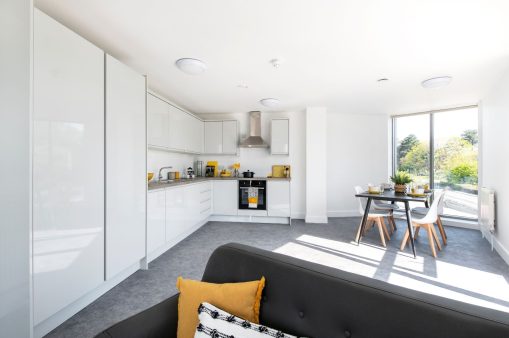
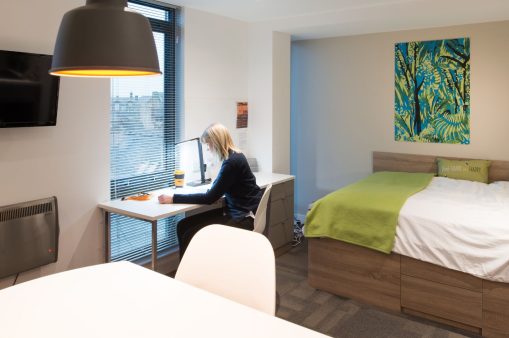
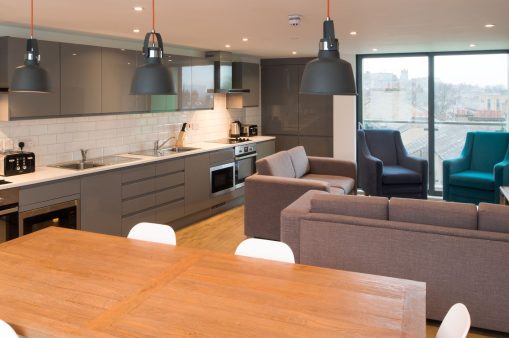
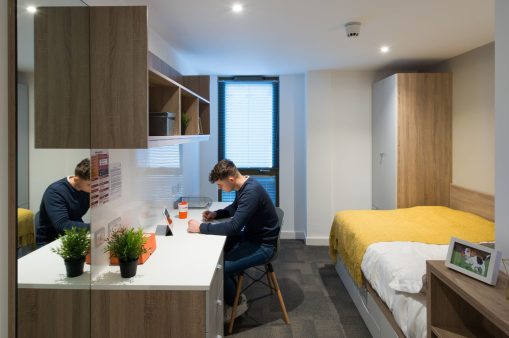
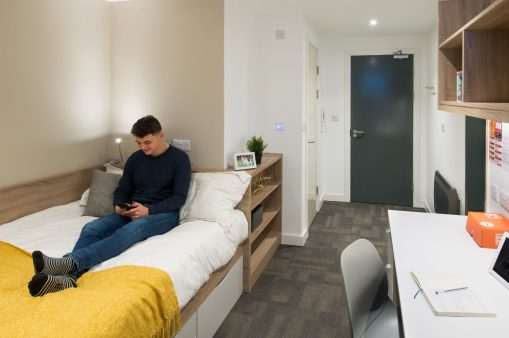
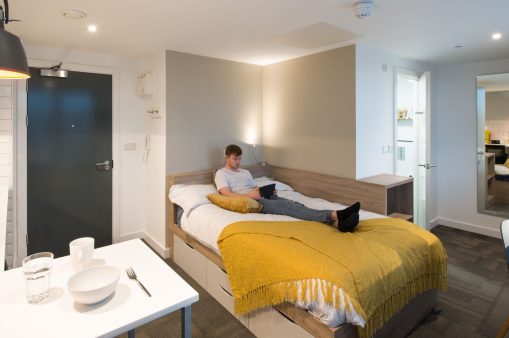
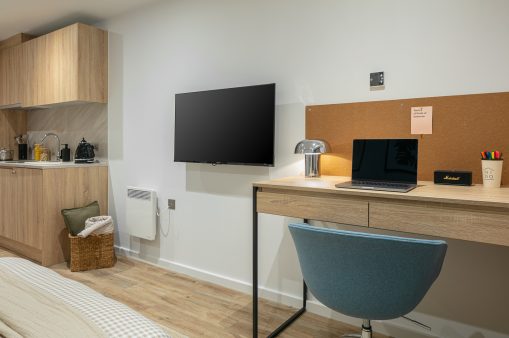
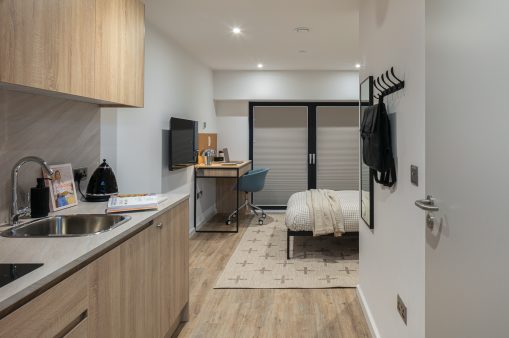
Most private student accommodation for Lancaster University students sits in the city centre, around three miles from the Bailrigg campus, with frequent Stagecoach buses connecting the two throughout the day. Properties on Mystudenthalls.com offer en-suite rooms, studios, and shared flats with bills included in the weekly rent, with prices typically starting from around £160 per week.
Bailrigg Student Living is the closest option to teaching buildings, with rooms a short walk from the central campus square at Alexandra Square. It’s one of the most convenient choices for students wanting to live within walking distance of lectures, with the parkland setting and on-site shops and supermarkets at your doorstep.
In the city centre, CityBlock Penny Street sits on one of Lancaster’s main pedestrian streets, close to the Charter Market and the pubs along Penny Street and Church Street. CityBlock Marton Street is around the corner, equally well placed for Lancaster railway station and the city centre shops, bars, and bus links south to Bailrigg.
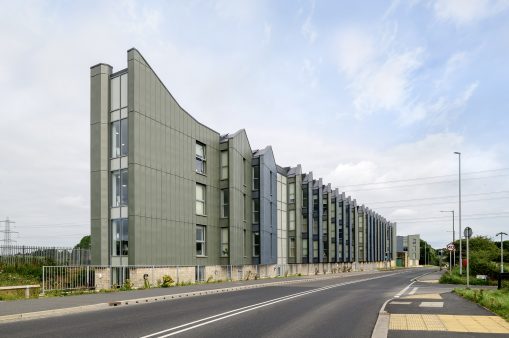
The Sail Works is located beside the River Lune at the western edge of the city centre, with studios and en-suite rooms available. It’s roughly a ten minute walk to the high street and the main bus routes to campus, and one of the newer options on the market.
For a wider view of the city, where students live, transport options, and what to expect from Lancaster outside the university gates, see our Lancaster student accommodation page.
About Lancaster University
Lancaster University was founded by royal charter in 1964 and is one of the UK’s collegiate universities, with nine colleges spread across its parkland campus at Bailrigg. It is a member of the N8 Research Partnership of northern research-intensive universities and has built a strong reputation for both research and teaching since its founding in 1964.
Rank
Lancaster sits 10th in the UK in the Complete University Guide 2026 and 14th in the Guardian University Guide 2026. It was ranked 15th out of 130 institutions and named University of the Year in the North West by The Times and Sunday Times Good University Guide 2026, the first year that award has been presented. Lancaster holds a TEF Gold rating awarded in 2023.
In the most recent Research Excellence Framework, 91 percent of Lancaster’s research was rated world-leading or internationally excellent, with 46 percent rated 4 star. Globally it sits 157th in the QS World University Rankings 2026 and is one of just 16 UK universities to hold a QS five-star overall rating.
Location
Lancaster University’s campus occupies a 578-acre parkland site at Bailrigg, three miles south of Lancaster city centre on the A6 and close to junction 33 of the M6. The university describes the campus as a small town in its own right, with shops, supermarkets, bars, a health centre, a post office, and a pharmacy all within walking distance of the colleges.
Getting between campus and the city is straightforward. Stagecoach services 1, 1A, 4, and 100 run frequently between Lancaster bus station and Bailrigg, with up to 14 buses an hour at peak times during term, and the journey takes around fifteen minutes. The N1 night bus runs after the regular services end. There’s also a signed traffic-free cycle route between the city and campus that takes around twenty minutes, with the Lancaster Canal towpath as a scenic walking alternative.
The University of Cumbria also has a campus in Lancaster, based in Bowerham closer to the city centre.
Employability
Lancaster is among the top 30 most targeted universities by the UK’s leading graduate employers according to The Graduate Market in 2026 report by High Fliers Research in association with The Times. Year-long industry placements are available across most undergraduate programmes, alongside faculty-specific placement schemes.
Lancaster University Management School is one of a small group of business schools globally to hold triple-crown accreditation from AACSB, EQUIS, and AMBA, and also holds the Small Business Charter award, giving it the rare quadruple accreditation status. Detailed graduate outcomes by course are available on the Lancaster University careers page.
Student fees
The UK undergraduate tuition fee for 2025/26 is £9,535 per year. International undergraduate fees vary by course and are set higher for laboratory-based programmes and medicine than for classroom-based subjects, so the best place to check the fee for a specific course is the Lancaster University fees and funding page. Postgraduate fees vary by programme and are also listed on the university’s website.
If you’re researching how the full cost of being a student adds up, our guide to how students pay for accommodation walks through maintenance loans, bursaries, and other funding options.
Bursaries and scholarships
Lancaster runs a substantial range of scholarships and bursaries across both undergraduate and postgraduate study. The Lancaster Bursary offers £1,000 a year for eligible Home undergraduates receiving UK government funding support. High-achieving international firm-choice undergraduates can apply for the Undergraduate Excellence Scholarship, worth £3,000 a year.
The Lancaster Master’s Scholarship offers up to £5,000 for Home students, with the exact amount tiered by faculty. The Master’s Excellence Scholarship for International Students offers faculty-tiered fee reductions of 20 to 25 percent, or up to £9,000 for high-achieving international postgraduates. Lancaster also runs International Regional Scholarships of £10,000 for taught postgraduates from a named list of 14 countries, with a £3,000-per-year equivalent for undergraduates from the same countries.
Lancaster graduates returning for postgraduate study also qualify for the Alumni Loyalty Scholarship, which offers a 10 percent fee reduction. The full list of named schemes, plus department-specific awards, is on the Lancaster scholarships and bursaries page.
Student life at Lancaster University
The campus at Bailrigg is at the heart of Lancaster’s student experience, and the university operates a collegiate system that is one of just a few in the UK. There are nine colleges in total, eight undergraduate colleges (Bowland, Cartmel, County, Furness, Fylde, Grizedale, Lonsdale, and Pendle) and the Graduate College for postgraduates. Each has its own bar, common rooms, and Junior Common Room (JCR), and there is no single central students’ union building in the way many UK universities have. The colleges run their own social calendars, sports teams, and welfare structures, with college advisers providing the first port of call for pastoral support.
Sport sits close to the centre of Lancaster’s student culture. The Sport Lancaster facilities on campus include a 25-metre swimming pool, two sports halls, a 100-station gym across the Fitness Suite and Strength & Conditioning Room, a sauna and steam room, two studios, a 3G pitch, and an 8.5-metre climbing wall and bouldering cave designed by the British mountaineer Sir Chris Bonington. Around 60 university sports clubs compete in BUCS leagues, and the highlight of the sporting calendar is the Roses Tournament, the annual intervarsity competition between Lancaster and the University of York. Established in 1965, Roses is described by the university as the largest inter-varsity sports tournament in Europe, with more than 140 fixtures across more than 45 sports played over a single weekend. Lancaster won the 60th-anniversary tournament on home soil in 2026, its fifth win in a row.
Beyond sport, Lancaster Students’ Union runs more than 160 societies covering everything from politics and entrepreneurship to anime, film, faith, food, and the outdoors. Student media is well established with the SCAN newspaper, Bailrigg FM, and LA1TV all student-run. The Sugarhouse on Sugar House Alley in the city centre is the SU’s own nightclub, operating since 1982 with a capacity of around 1,100, and is the centre of student nightlife with regular Wednesday, Friday, and Saturday nights. The free Sugarbus service runs between Bailrigg and The Sugarhouse on club nights so getting back to campus is straightforward.
For everything Lancaster the city has to offer beyond the university gates, including the castle, the canal, the cafés and pubs along Penny Street, Williamson Park, and the train links to Morecambe and the Lake District, see our Lancaster student accommodation page.
Lancaster University accommodation FAQs
Does Lancaster University guarantee accommodation for first-year students?
Yes for full-time undergraduates who make Lancaster their UCAS firm choice and apply for accommodation by 5 August. Insurance choice and Clearing students are not formally guaranteed but are usually accommodated. Lancaster is approved under the UUK Student Accommodation Code, which sets standards for university-managed halls across the UK.
How much is accommodation at Lancaster University?
On-campus rents for 2026/27 start at £138.88 per week for a shared-bathroom room, with most en-suite rooms at £206.08 per week, single studios from £241.36 per week, and catered en-suite rooms from £276.29 per week. The university also runs Chancellor’s Wharf, a block of city centre halls available to continuing students at £147.00 per week on a 43-week contract for 2026/27. Private student accommodation on Mystudenthalls.com near Lancaster University currently starts from around £160 per week, with bills included.
Where do most Lancaster University students live?
Most first-year undergraduates live on the Bailrigg campus in one of the nine colleges. After first year, many students move into private student accommodation either in the city centre, in private rentals close to campus, or in established student areas like Bowerham and Hala. A smaller number stay on campus into later years, particularly in studios or in Chancellor’s Wharf.
When should I apply for Lancaster University accommodation?
Applications for on-campus accommodation usually open in April. Firm-choice undergraduates should apply by 5 August to secure the first-year guarantee, and full-time taught postgraduates starting in October 2026 should apply by 31 July to secure their postgraduate guarantee. Insurance students hear from accommodation services after results in mid-August. Private student accommodation in the city is typically booked between November and March for the following September intake, though some properties fill earlier.
Do postgraduates and international students get accommodation at Lancaster?
Full-time taught postgraduates starting in October 2026 are guaranteed a place in university-owned, managed, or approved accommodation if they apply by 31 July. Research postgraduates are not formally guaranteed but are encouraged to apply. International students apply through the same process as Home students, and under-18 students are housed in a designated under-18 accommodation cluster.
Can I live off-campus at Lancaster University?
Yes, and most students do after first year. Lancaster University Homes is the university and Lancaster City Council’s accreditation scheme for private city housing, covering both city halls and HMOs. Private student accommodation listings on Mystudenthalls.com offer en-suite rooms and studios in the city with bills included, and our guide to the different types of student accommodation walks through the differences between halls, PBSA, and shared houses.
How do I get from the city centre to Lancaster University campus?
Stagecoach services 1, 1A, 4, and 100 run between Lancaster bus station and the Bailrigg campus at high frequency throughout the day, with a journey time of around fifteen minutes. The N1 night bus covers the late-night return. There’s also a signed traffic-free cycle route that takes around twenty minutes from the city, with the Lancaster Canal towpath as a walking alternative.