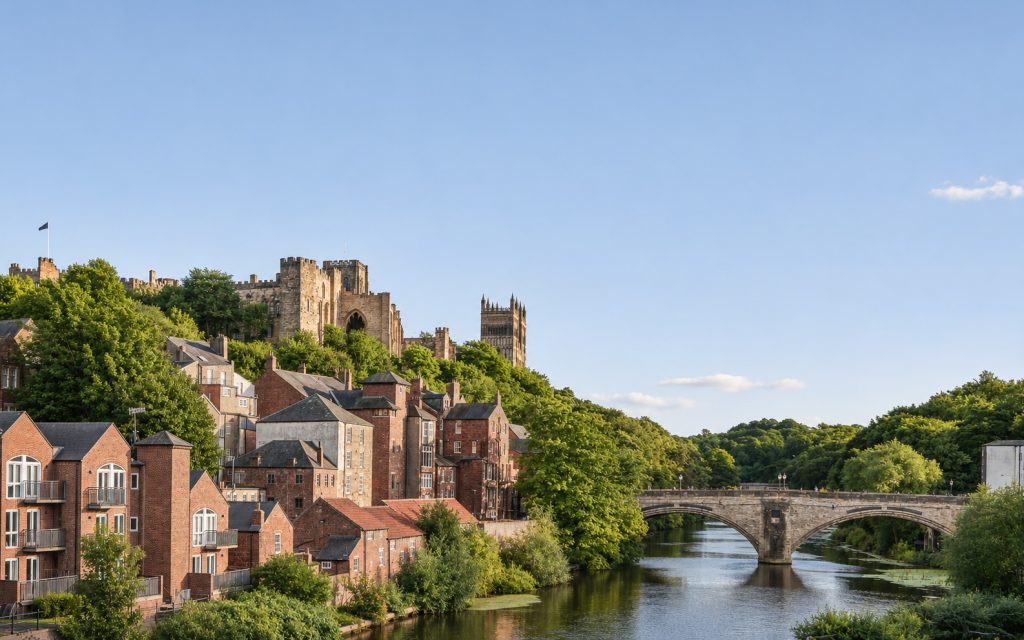
Durham University is 6th in the UK in the 2027 editions of the Complete University Guide, the Guardian University Guide and the Times and Sunday Times Good University Guide, all published in 2026. Whether you would be happy there is a different question. That depends on the college system, which shapes most of the social life, and on a small, hilly city where a night out is often a college bar or a train to Newcastle.
Founded in 1832, the university has 17 colleges and 21,730 students (2025/26) in a cathedral city in County Durham.
What the league tables say
All three main UK tables put Durham University in the same place for 2027, and QS has it in the world’s top 100.
- In the Complete University Guide 2027, published in June 2026, the university is 6th of 130.
- In the Guardian University Guide 2027, published in September 2026, it is 6th, down one place from the 2026 edition.
- In the Times and Sunday Times Good University Guide 2027, published in September 2026, it is 6th. The same guide named it University of the Year in its 2026 edition.
- In the QS World University Rankings 2027, published in June 2026, it is 85th in the world, nine places higher than in the 2026 edition.
The tables weigh entry grades, satisfaction, research, spending, continuation and graduate outcomes differently, and positions move a few places between editions. Inside the Complete University Guide 2027 it is 3rd in the UK for continuation, the share of students who carry on with their course, and 18th for student satisfaction, which draws on the National Student Survey. The Office for Students’ Teaching Excellence Framework, last awarded in 2023, rated it Silver overall, with Gold for student outcomes. Students stay the course and do well afterwards; satisfaction sits further down the table than the overall position.
What collegiate means at Durham
Every student belongs to one of 17 colleges. Ustinov College at Sheraton Park is postgraduate-only, so undergraduates are placed across the other 16. If you take the first-year accommodation offer, your college is where you live and, in a catered college, where you eat. It is also the base for the bars, formals, sports teams and societies that carry much of student life, and you stay a member after you move out. Colleges are not tied to subjects, so a physicist and a historian can share a corridor.
The colleges sit in two main groups. The Bailey colleges, among them University College (which occupies the castle), Hatfield and St John’s, are on the peninsula around the cathedral. The Hill colleges, Collingwood, Grey, St Mary’s and Van Mildert among them, are south of the river near the Mountjoy site. The College of St Hild and St Bede has been at Rushford Court in the Viaduct area since 2024 while the university decides what to do with its old site on the east side of the city.
Teaching, courses and what Durham is known for
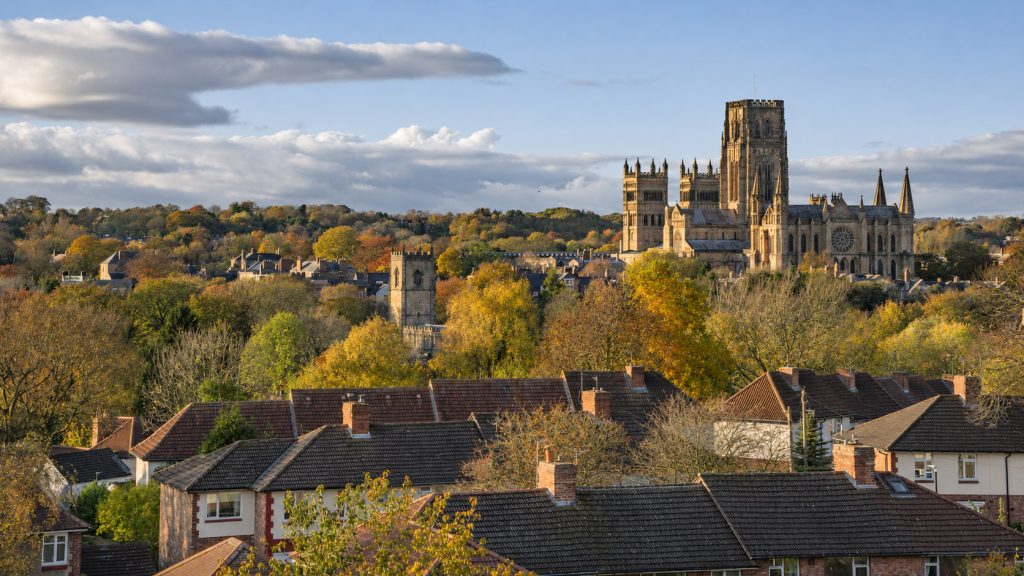
Your degree is taught by your department, whichever college you join. The university has 27 departments and schools and over 300 courses. Most departments and the Bill Bryson Library are at the Mountjoy site at the top of the hill, the Elvet Riverside lecture theatres are near the peninsula, and the Business School is split between Mill Hill Lane and its Waterside building by the river in the city centre.
In the Guardian University Guide 2027 it is 1st in the UK for sports science and for accounting and finance, and 2nd for biology, English and education, with 19 subjects in the top five. The Times and Sunday Times Good University Guide 2027 puts 30 of its subjects in the top ten.
Beyond the subject tables the university is known for sport. Team Durham runs 58 sports clubs and describes itself as consistently 3rd in the country in the BUCS university sport rankings. The 17 colleges field over 650 teams of their own, in what Team Durham calls the largest intercollegiate programme in the country.
Where you live: college rooms, then private accommodation
The university guarantees all new undergraduates an offer of university accommodation, provided they say they want one when they apply for college membership. If you decline the offer or miss the deadline to accept it, the university cannot guarantee a second one.
A new undergraduate’s college contract for 2026/27 runs for 39 weeks, from 26 September to 26 June, and in a catered college the catering charge is £107.11 a week for 21 meals. Room charges differ by college and room type, so take one college as an example. At St John’s College on the Bailey, a catered standard room with a shared bathroom is £10,430.80 for the 39 weeks in 2026/27, including catering, or about £267 a week. Self-catered colleges charge for the room alone, and the university’s money guidance says college charges usually include water, gas, electricity and broadband.
College accommodation after first year is not guaranteed. The university says its second and third-year undergraduates live in private accommodation and stay full members of their college, and a few return to college where rooms are available. Purpose-built student buildings are one part of that private market. Starting prices for the rooms on Mystudenthalls.com range from £189 to £275 a week depending on the building, with bills included. Our Durham student accommodation page compares them by area and room type, and our Durham University page sorts them by distance from the university. You sign a separate accommodation contract with the private provider, and many ask for a guarantor, which our guides to booking student accommodation and to guarantors explain.
Is Durham a nice place to live as a student?
It is small, and in term time it is a student city. The built-up area had 50,510 residents at the 2021 Census, according to the Office for National Statistics, and Durham County Council’s Durham Insight profile records 21.0% of residents aged 16 and over in the wider City of Durham area as full-time students.
Most everyday journeys are walkable. The university puts St John’s College on the Bailey at a 7-minute walk from the city centre and Ustinov College at around 19 minutes from both the centre and Mountjoy. Many of the walks are steep, because the peninsula climbs from the River Wear to the cathedral.
The centre is the Market Place, with the Market Hall beside it. For groceries there is a Tesco Express on Claypath, a short walk from the Bailey, and a Tesco Extra at Dragon Lane in Gilesgate. The Students’ Union is in Dunelm House on New Elvet.
For an evening out beyond the college bars there is the Gala, the council’s theatre and cinema off the Market Place, the Odeon at The Riverwalk, and the Walkergate restaurants by the river. The riverside path around the peninsula is a walk most students get to know, and the Botanic Garden on the Hill is free with a campus card.
Nightlife and getting out of Durham
Durham’s nightlife is small, and much of it happens inside the colleges, through their bars, formals and events. The city centre has a handful of clubs, Babylon and Loft among them, and Newcastle gives you a wider choice of venues.
Newcastle is 12 to 20 minutes away by train, with LNER, TransPennine Express, CrossCountry and Northern all running the route. On the 2026 timetables the last LNER or TransPennine Express train from Newcastle to Durham leaves before 11pm on weekdays, while trains from Durham to Newcastle run until around midnight, and the weekend times differ.
What it costs
The maximum maintenance loan for a student from England living away from home outside London is £10,830 for 2026/27, according to GOV.UK, and a catered college room takes most of it. The St John’s catered standard room at £10,430.80 leaves £399.20 of the maximum loan for everything else across the year. A self-catered room’s charge excludes catering. The university’s money guidance puts food at about £60 a week on top. Our maintenance loan guide explains how household income reduces the amount most students receive, and our student budgeting guide turns the loan into a weekly figure once the rent is paid.
Private rooms are priced by the week over longer contracts, and the yearly total is the figure to compare. At £189 a week, a 51-week contract comes to £9,639, and our guide to how much student accommodation costs has the national picture to set beside it. A flat where everyone is a full-time student has no council tax bill (our council tax guide covers mixed households).
Save the Student’s 2026 money survey puts the average monthly spending after rent reported by Durham University respondents at £442. Day-to-day travel is a small part of that because most of the city is walkable. The university’s money guidance, published in July 2025, gives an Arriva day ticket at £1.50 to £2.50, a 16-25 Railcard costs £35 a year for a third off rail fares, and advance singles between Durham and Newcastle sell for under £3.
Who Durham suits, and who it might not
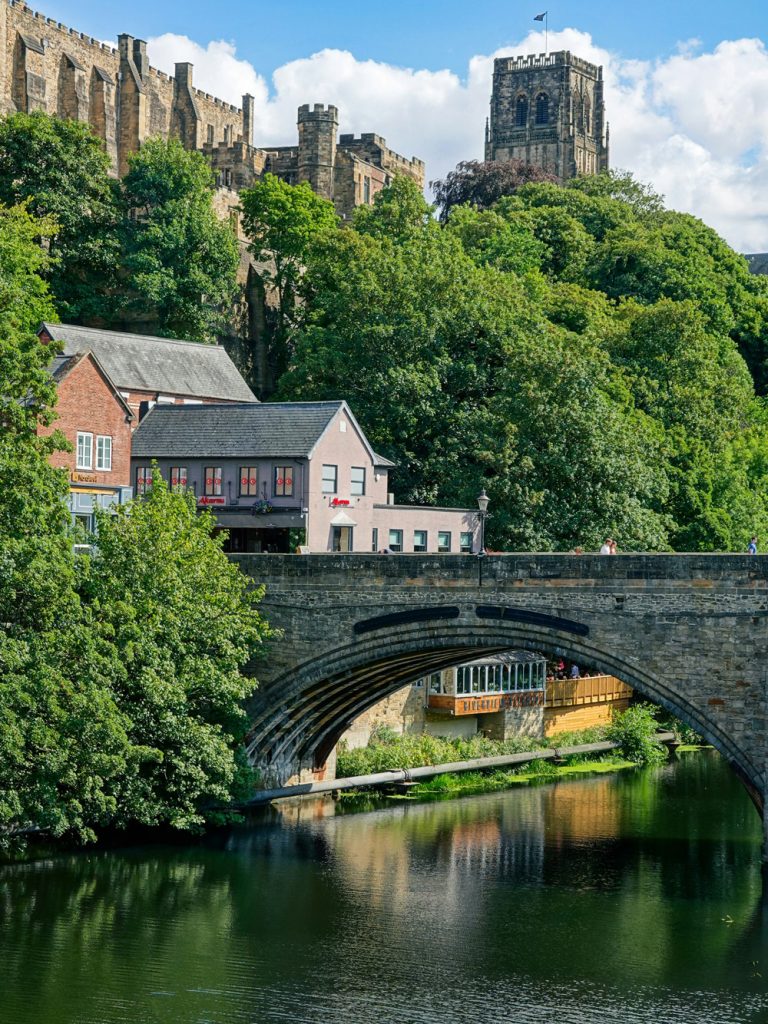
Durham suits you if you want a university near the top of the tables and a social life built around a college and its sport, societies and formals, in a city small enough to walk across. It also suits the student who likes knowing people wherever they go, because in a college of a few hundred first years you probably will.
It might not suit you if you want a big city, a club scene with a choice of venues every night, or the anonymity of a place where nobody knows your college. It is also not a campus with everything on one site. Teaching, colleges and the centre are spread across a hilly city, and the main alternative for a night out is a train to Newcastle. If those things matter more than the tables, weigh them before you put Durham first.
Sources
- Durham University: about us (student numbers, colleges), league tables (Guardian, Times and QS positions), Team Durham (clubs and college teams), residence charges 2026/27 (contract weeks, catering), St John’s College charges 2026/27 (the St John’s room), student money advice (food and bus costs), access and participation plan (intake targets).
- Rankings and student data: Complete University Guide (6th of 130, continuation, satisfaction), Office for Students (TEF 2023), HESA student numbers (2024/25) and widening participation indicators (state-school share), Russell Group (membership).
- Government and council: GOV.UK (maintenance loan), Durham Insight (student share of residents).
- Living costs and transport: Save the Student (£442 a month), 16-25 Railcard (price), LNER timetable (journey times and last trains).
Figures come from the named sources and can change.
Last updated November 2026
Is Durham a good university? FAQs
Is Durham a Russell Group university?
Yes. Durham University is one of the Russell Group’s 24 research-intensive members and joined in 2012, alongside Exeter, York and Queen Mary University of London.
How many students are at Durham University?
The university counts 21,730 students for 2025/26. HESA’s figure for 2024/25 is 21,150, of whom 16,560 were undergraduates and 4,590 postgraduates.
Is Durham a campus university?
No. Durham University is collegiate, with 17 colleges on the Bailey, on the Hill and elsewhere in the city, and departments mostly at the Mountjoy site, so there is no single campus.
Where is Durham University?
Durham University is in the city of Durham, County Durham, in north-east England, with its colleges split between the peninsula and the hill south of the River Wear. Newcastle is 12 to 20 minutes away by train.
Is Durham hard to get into?
It asks for high grades. Standard A-level offers on the university’s course pages run from A*A*A to ABB, with A*AA or AAA the most common, and it publishes the share of applications that get an offer for each course.
Is Durham Uni posh?
By intake figures, more of its students come from private schools than at most UK universities. In HESA’s last published widening participation figures, for 2020/21, 61.6% of Durham University’s young full-time UK undergraduate entrants came from state schools, against a benchmark of 78.5% for a university with its entry grades and subject mix. The Times and Sunday Times Good University Guide 2025 put the privately educated share at 39.1%, one of the highest of any UK university. The university’s access and participation plan for 2025/26 to 2028/29 calls the proportion from independent schools high and sets targets for entrants from low-participation areas and for those who had free school meals.