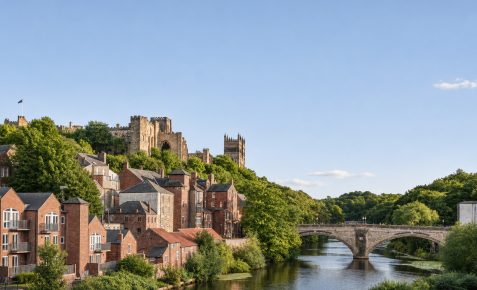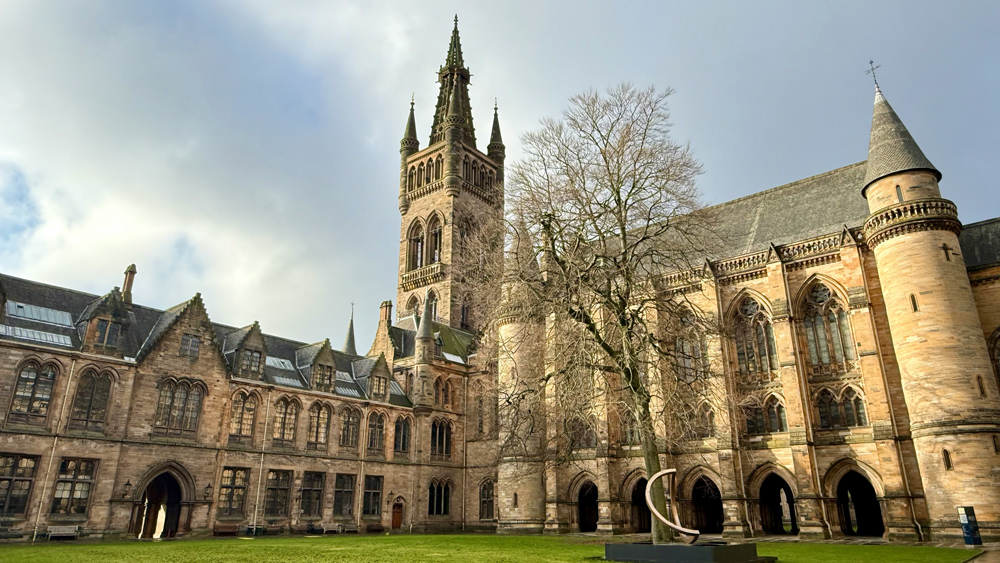
There are 24 Russell Group universities, spread across all four nations of the UK. They include Oxford, Cambridge and Imperial College London, along with large city universities such as Manchester, Leeds and Glasgow. The Russell Group is an association of research-intensive universities. It is not a ranking or an official mark of quality, and several universities that sit above most of its members in the league tables are not in it.
List of Russell Group universities
The table lists all 24 in the order the group uses on its own site, with the year each joined and its position in the Complete University Guide 2027.
| University | City | Joined | Complete University Guide 2027 |
|---|---|---|---|
| University of Birmingham | Birmingham | 1994 | 12th |
| University of Bristol | Bristol | 1994 | 17th |
| University of Cambridge | Cambridge | 1994 | 1st |
| Cardiff University | Cardiff | 1998 | Joint 27th |
| Durham University | Durham | 2012 | 6th |
| University of Edinburgh | Edinburgh | 1994 | 19th |
| University of Exeter | Exeter | 2012 | 11th |
| University of Glasgow | Glasgow | 1994 | 29th |
| Imperial College London | London | 1994 | 5th |
| King’s College London | London | 1998 | 16th |
| University of Leeds | Leeds | 1994 | 18th |
| University of Liverpool | Liverpool | 1994 | 22nd |
| London School of Economics | London | 1994 | 3rd |
| University of Manchester | Manchester | 1994 | 24th |
| Newcastle University | Newcastle upon Tyne | 1994 | 35th |
| University of Nottingham | Nottingham | 1994 | 26th |
| University of Oxford | Oxford | 1994 | 2nd |
| Queen Mary University of London | London | 2012 | 40th |
| Queen’s University Belfast | Belfast | 2006 | 23rd |
| University of Sheffield | Sheffield | 1994 | Joint 13th |
| University of Southampton | Southampton | 1994 | 15th |
| University College London | London | 1994 | Joint 13th |
| University of Warwick | Coventry | 1994 | 7th |
| University of York | York | 2012 | 20th |
Positions are from the main table of 130 UK universities in the Complete University Guide 2027.
Seventeen universities founded the group in 1994. Cardiff University and King’s College London joined in 1998 and Queen’s University Belfast in 2006. Durham University, the University of Exeter, Queen Mary University of London and the University of York were invited to join in 2012.
What is a Russell Group university?
A Russell Group university is one of the 24 members of the Russell Group, which was formed in 1994. The group represents its members to government, research funders and regulators, and describes itself as representing “24 leading universities across the UK”.
Citing HESA data, the group says its members teach around 750,000 students, about a quarter of all students in the UK. It also says 91% of their research was rated world-leading or internationally excellent in the 2021 Research Excellence Framework. Membership is not a government category and no regulator awards it.
Where the Russell Group universities are
Twenty of the 24 members are in England. Scotland has two, the University of Edinburgh and the University of Glasgow. Wales has one, Cardiff University, and Northern Ireland has one, Queen’s University Belfast. London is the only city with more than one member. Where you study also affects your living costs. Our guide to what student accommodation costs sets out the figures by city, and you can search for student accommodation near any university on Mystudenthalls.com.
Russell Group universities in London
Five members are in London: Imperial College London, King’s College London, the London School of Economics, Queen Mary University of London and University College London. King’s, LSE, Queen Mary and UCL are also member institutions of the University of London, a federation that is a separate body and is not itself in the Russell Group. Imperial left the federation in 2007.
Russell Group universities ranked
In the Complete University Guide 2027, published in June 2026, the five highest-placed members are the University of Cambridge (1st), the University of Oxford (2nd), the London School of Economics (3rd), Imperial College London (5th) and Durham University (6th). The lowest-placed member in that table is Queen Mary University of London, which is 40th of 130 universities.
The Guardian University Guide 2027, published in September 2026, puts the University of Oxford first. The Times and Sunday Times Good University Guide 2027, published the same month, places the University of St Andrews first, with the London School of Economics second as its highest-placed member. Worldwide, Imperial College London is joint second in the QS World University Rankings 2027, the highest position of any member.
The rankings differ because each guide uses its own measures and weightings. The Complete University Guide counts research quality alongside entry standards, student satisfaction and graduate prospects, while the Guardian’s guide is built around students’ experience and outcomes, so a university can sit several places apart from one table to the next.
Universities that are not in the Russell Group
Several universities that people assume are members are not. The table lists 20 of them.
| Not in the Russell Group | Complete University Guide 2027 |
|---|---|
| University of St Andrews | 4th |
| Loughborough University | 8th |
| University of Bath | 9th |
| Lancaster University | 10th |
| University of Surrey | 21st |
| University of Leicester | 33rd |
| University of East Anglia | 34th |
| University of Sussex | 36th |
| Swansea University | 41st |
| Royal Holloway | 42nd |
| University of Reading | 43rd |
| Brunel University of London | 48th |
| University of Portsmouth | Joint 50th |
| Aston University | 52nd |
| Keele University | 54th |
| City St George’s, University of London | 59th |
| University of Kent | 62nd |
| University of Plymouth | 67th |
| Kingston University | 88th |
| University of Brighton | 104th |
Positions are from the main table of 130 UK universities in the Complete University Guide 2027.
Not being a member is no mark against a university. Four of the top ten in the Complete University Guide 2027 are non-members. Several of them belonged to the 1994 Group, a separate association that wound up in November 2013.
Does it matter whether a university is in the Russell Group?
Every member is research-intensive, and the group says all of them are high-tariff, meaning they are in the top third of universities by the entry grades of their students. Most are long established. The University of Warwick, founded in 1965, is the youngest of the original members.
For an applicant the practical effect is high entry grades, though offers vary by course, so check the course page before ruling a university in or out. Applications to the University of Oxford and the University of Cambridge close in mid-October, three months before the January deadline for most other courses. For 2027 entry UCAS gives the two dates as 15 October 2026 and 13 January 2027.
Membership says nothing about how good a particular course is or how well you will be taught on it. The Teaching Excellence Framework, run by the Office for Students, rates universities and colleges in England on the student experience and student outcomes. The National Student Survey asks final-year undergraduates across the UK about the quality of their course every year, and the results are published on Discover Uni, so you can set a member and a non-member side by side.
Employers do pay attention to these universities. In The Graduate Market in 2026, High Fliers Research’s yearly survey of 100 graduate employers, the five universities targeted by the most employers were the University of Manchester, the University of Birmingham, the University of Nottingham, the University of Warwick and University College London, and all five are members. The survey counts where employers run careers fairs and presentations. It does not record who they hire.
Sources
- The Russell Group: Who we are, Our universities, its University of Warwick profile and Informed Choices for the member list, the group’s own figures and BTECs.
- League tables: the Complete University Guide 2027, the Guardian University Guide 2027, the Times and Sunday Times Good University Guide 2027 and the QS World University Rankings 2027 for the league table positions.
- The Office for Students: the Teaching Excellence Framework and the National Student Survey for what each one measures and where the results are published.
- Universities and the higher education press: the University of London, Imperial College London, Queen Mary University of London, the University of Southampton, the University of Leeds, the University of Birmingham, the Ivy League’s own site, Times Higher Education and Wonkhe for joining years, the name, the University of London, the 1994 Group, Clearing and the Ivy League.
- UCAS and High Fliers Research: UCAS’s dates and deadlines and The Graduate Market in 2026, as reported by the University of Manchester, for application deadlines and the employers’ survey.
Figures come from the named sources and can change.
Russell Group universities FAQs
How many Russell Group universities are there?
There are 24. The most recent four joined in 2012 and the membership has not changed since.
Is Bath a Russell Group university?
No. The University of Bath is not a member. It belonged to the 1994 Group until 2012. In the Complete University Guide 2027 Bath is 9th, above 18 of the 24 members.
Is the University of London in the Russell Group?
The University of London itself is not a member. It is a federation of 17 institutions, and four of them are in the Russell Group: King’s College London, the London School of Economics, Queen Mary University of London and University College London. The others, Royal Holloway, City St George’s, SOAS, Goldsmiths, Birkbeck and Brunel University of London among them, are not.
Why is it called the Russell Group?
It is named after a hotel. The heads of the founding universities held their first informal meetings at the Hotel Russell in Russell Square, London, and the name stayed when the group was set up in 1994.
Are Russell Group universities better?
Not necessarily. Russell Group universities have a strong research focus, but membership alone does not tell you how good a particular course will be. For universities in England, check the university’s Teaching Excellence Framework rating alongside student feedback for your chosen course on Discover Uni.
Is the Russell Group like the Ivy League?
Only loosely. The Ivy League is an athletic conference of eight universities in the United States: Brown, Columbia, Cornell, Dartmouth, Harvard, Penn, Princeton and Yale. The Russell Group represents 24 UK universities on policy and funding and has nothing to do with sport. The comparison is made because both names are used as shorthand for well-known research universities.
Which are the best non-Russell Group universities?
In the Complete University Guide 2027 the highest-placed non-members are the University of St Andrews (4th), Loughborough University (8th), the University of Bath (9th), Lancaster University (10th), the University of Surrey (21st) and the University of Dundee (25th). The Times and Sunday Times Good University Guide 2027 puts St Andrews first of all UK universities. Each table orders them differently, so go by the one whose measures matter to you.
Do Russell Group universities take students through Clearing?
Some do, on some courses. The University of Leeds and the University of Birmingham both had Clearing vacancies for 2026 entry. Vacancies change by course and by year, so check UCAS’s Clearing search and each university’s own Clearing page. If you get a place that way, our guide to student accommodation through Clearing covers finding somewhere to live.
Do Russell Group universities accept BTECs?
For some courses, yes. Informed Choices, the Russell Group’s guide to subject choices, says its universities accept vocational qualifications such as BTECs where they are appropriate for the course, and that some will expect A levels and GCSEs as well. Check the entry requirements for the course on the university’s own site.